


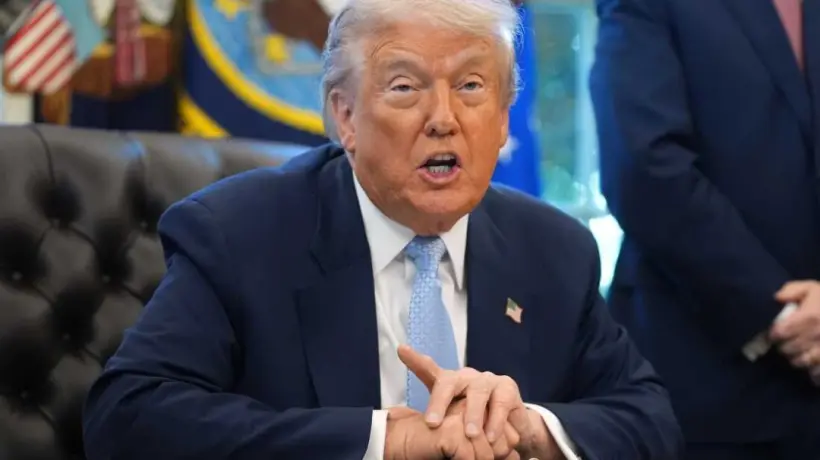
During his appearance at the McDonald's Impact Summit last week, US President Donald Trump indicated that California Governor Gavin Newsom was applying enormous pressure by raising the minimum wage, emphasizing the detrimental impact this action would have on the state's restaurant business.
Trump's statements coincided with the implementation of California's minimum wage rise for fast-food restaurant workers, which began approximately a year and half ago.
Details about the wage increase in fast-food restaurants
Employees at fast-food restaurants with more than 60 sites throughout the country will be paid a minimum of $20 per hour beginning April 2024.
This marks a 25% increase from the current California minimum wage of $16 per hour.
This reform was adopted as part of a comprehensive statute that created an industry council with the capacity to set industry standards and increase the minimum wage on an annual basis.
Market Attractiveness Despite Rising Costs
Despite increased operating expenses, California continues to attract fast-food restaurants. Approximately 2,300 new restaurants were added between the first quarters of 2024 and 2025, showing a 5% growth rate that outpaced the national growth rate of roughly 2%.
Many employees have already benefited from the increased salary hikes.
For example, Zane Mart, 28, remarked that he has been able to provide for his family and satisfy his basic necessities for the first time since the law went into force.
According to a recent research conducted by the University of California, Berkeley, the median salary prior to the law's introduction was roughly $17.13 per hour, implying that employees saw an average real rise of approximately 17%.
The Impact of the Decision So far, studies show a considerable drop in employee turnover at fast-food companies following salary hikes.
There have been no mass branch closures reported to far, and big brands continue to establish new locations throughout California.
However, restaurant owners are under growing pressure due to increased costs and a drop in dining out, which has had a partial influence on the prices of several items given to clients.
Background on the Labor-Industry Dispute
The salary hike was the outcome of a long deal reached between industry officials and unions following months of intense discussion over its economic and social ramifications.
The International Service Employees Union (ISE) stressed the significance of the regulation in enhancing working conditions and lowering employee turnover. Meanwhile, several restaurant owners think the industry has been particularly targeted and that the higher charges would impose an additional strain on them.
Keri Harper-Howey, president of the WEH Group, which manages 25 McDonald's outlets in Los Angeles County, commented, "I think that everyone has the right to a decent pay; nevertheless, as an industry, we felt that we were the only ones targeted by this legislation. Every minimum-wage worker should be eligible for the same benefits.
Effect of the Decision on Consumers and Other Markets
So yet, no other state has followed California's lead, and the national restaurant sector is keenly monitoring the situation and attempting to push against similar regulations being adopted in other places. Most observers believe that service rates for clients have risen by no more than 10% at the bulk of the restaurant chain's outlets in the state. Businesses are finding it difficult to raise prices more, particularly given the diminished purchasing power of a big portion of low-income consumers.
Additional Burdens for Business Owners
Employee expenditures are the main cost component in the restaurant industry, with operators typically aiming for roughly 30% of overall expenses.
In addition to rising raw material prices and recent low consumer spending, the rise in the minimum wage adds to everyday work demands.
Practical examples for certain investors and franchisees.
Seventeen months after the Higher Wage Act went into effect, WEH Group saw a decrease in sales at numerous branches compared to the same time prior to the decision.
However, the pattern flipped in October of last year, coinciding with the one-year anniversary of the E. coli epidemic, which had previously had a considerable impact on sales volume.
Harper-Howe reaffirmed that the average price rise was no more than 10%, stating that larger increases were difficult owing to diminishing demand, particularly among low-income earners.
The Impacts of Disasters and Other Public Policies
The recent Los Angeles wildfires have raised operational constraints for some McDonald's operators, with some stores temporarily shutting and reporting a major decline in customer numbers as a result of evacuations and tourist concerns.
Regarding federal immigration regulations, Harper-Howe stated that the previous Trump administration's measures harmed a substantial section of Hispanic employees, leaving them concerned about their job and future prospects.
Jobs Under Threat and Debate on the Decision's Impact
Julia Gonzalez, 21, one of the restaurant workers affected by the decreased hours, indicated that she was nevertheless able to make a somewhat better salary when the new pay scale was adopted than before.
Similarly, Harper-Howe acknowledged that her company was cutting the hours of some employees following a sales slowdown and fears about losing consumers as a result of the price hike.
Estimates of the law's true impact on jobs vary; data from the Employment Policy Institute indicates that approximately 16,000 jobs have been eliminated in the express service sector since the new legislation was signed thus far - while a recent study by the University of California finds no clear evidence linking job losses directly to the law, even after accounting for seasonal changes and the region's moderate climate.








Comments
Log in to write a comment