


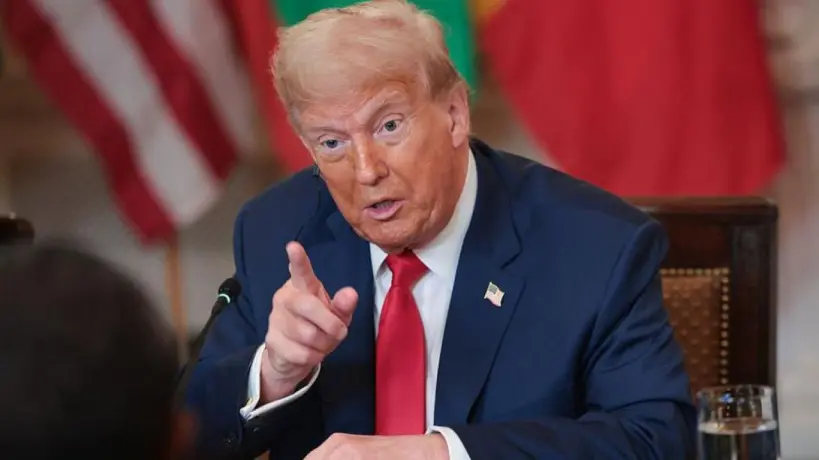
Trump has announced significant U.S. military support for Ukraine while expressing caution over harsher bipartisan sanctions on Russia. New tariffs have been proposed, but the efficacy of such measures remains uncertain. Experts caution about potential challenges in enforcement, particularly with Russia's resilience and the complexity of global oil markets.
In a recent address, former President Donald Trump voiced his frustration over the enduring war, pledging substantial military support for Ukraine in the form of “billions and billions” of dollars worth of U.S. weapons. While expressing this commitment, Trump proposed imposing new tariffs on Russia, though he remained skeptical about additional bipartisan efforts to further penalize the nation.
"I’m not sure we need it," Trump remarked regarding the prospective legislation aimed at increasing sanctions against Russia. "It could be very useful. We’ll have to see." This legislative proposal intends to amplify sanctions and implement 500% tariffs on products imported from countries engaged in purchasing Russian oil, gas, and other exports. In contrast, Trump suggested unilaterally enforcing 100% tariffs.
"I use trade for a lot of things," he noted. "But it’s great for settling wars." This sentiment reflects Trump’s belief in utilizing economic measures as a tool for conflict resolution.
Since December 5, 2022, when the European Union banned Russian oil, significant shifts in crude oil exports have been observed. China has emerged as a major buyer, acquiring 47% of Russian crude, followed by India at 38%. Turkey and the European Union each account for 6% of these exports, according to the Centre for Research and Clean Air, a Finnish non-profit monitoring the energy sector.
Zongyuan Zoe Liu, a senior fellow in China studies at the Council on Foreign Relations, expressed skepticism about the impact of tariffs on altering the war's trajectory. "Oil is fungible, and Russia has developed a nimble shadow fleet," he commented. "So enforcement would be a challenge." Nevertheless, the potential impact of new tariffs remains significant, contingent on their implementation.
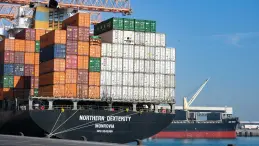
The imposition of a 100% tariff on China, combined with existing import taxes, could effectively disrupt trade between the United States and China, the world’s leading economies.
In a joint statement, co-sponsors of the congressional sanctions package, including Senators Lindsey Graham and Richard Blumenthal, applauded Trump for making "a powerful move." They concurrently defended their legislative initiative. "The benefit of our approach is that it blends congressional authorization of tariffs and sanctions with flexibility for presidential implementation, making it rock solid legally and politically," they emphasized.
Contributions to this report were provided by Associated Press journalists across various regions, including Lorne Cook in Brussels, Geir Moulson in Berlin, Paul Wiseman and David Klepper in Washington, and Katie Marie Davies in Manchester, England.





Comments
Log in to write a comment