
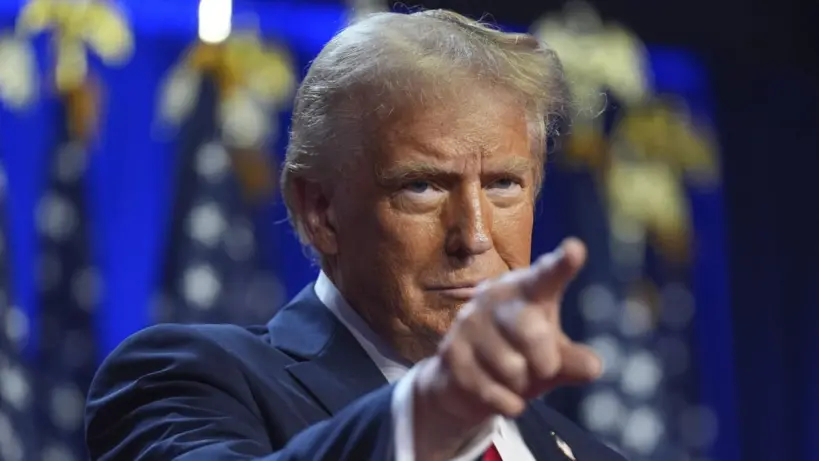
President Trump has announced a travel ban on citizens from twelve countries, alongside new restrictions for seven others, in response to security concerns. The ban will be effective from June 9, following a recent attack in Boulder, Colorado. Exemptions will apply to certain individuals, including green card holders and dual citizens.
In a decisive move on Wednesday, President Donald Trump announced a travel ban for citizens from twelve countries, declaring, "we don’t want them." The action was taken in conjunction with newly imposed restrictions on visitors from seven additional nations.
The countries affected by the travel ban include:
- Afghanistan
- Chad
- Republic of Congo
- Equatorial Guinea
- Eritrea
- Haiti
- Iran
- Libya
- Myanmar
- Somalia
- Sudan
- Yemen
Additionally, countries undergoing enhanced restrictions are:
- Burundi
- Cuba
- Laos
- Sierra Leone
- Togo
- Turkmenistan
- Venezuela
The new regulations are set to take effect on Monday, June 9 at 12:01 AM. A cushion period has been established to prevent airport chaos, recalling previous disruptions when a similar measure was immediately enforced during Trump's initial term in 2017.
Response to Recent Attack
The decision follows closely on the heels of an attack in Boulder, Colorado, where an Egyptian national was detained and charged. The Department of Homeland Security later confirmed that the individual had overstayed their tourist visa. It is noteworthy that Egypt is not included in the list of banned countries.
In a video statement, President Trump cited inadequate screening and historical non-compliance by some nations in recovering their citizens as reasons for the ban. He stated, "The recent terror attack in Boulder has underscored the extreme dangers posed to our country by the entry of foreign nationals who are not properly vetted, as well as those who come here as temporary visitors and overstay their visas. We don’t want them."
Certain categories of individuals will be exempt from the ban, including green card holders, dual citizens who also hold American citizenship, those seeking visas through US family connections, athletes and their accompanying personnel traveling for major sporting events, and refugees granted asylum. There is also a provision for Afghans who assisted the US, allowing entry through a special visa program.
Discussing Afghanistan’s situation, Trump remarked on the country’s lack of a competent or cooperative central authority for document issuance and inadequate screening measures.
According to Reuters, Somalia has expressed a willingness to cooperate with the US to address security issues. Dahir Hassan Abdi, the Somali ambassador to the US, conveyed, "Somalia values its longstanding relationship with the United States and stands ready to engage in dialogue to address the concerns raised."
Conversely, Venezuela's Interior Minister, Diosdado Cabello, labeled the US government as fascist, cautioning fellow Venezuelans about the perceived risks of being in the United States. "The truth is, being in the United States is a big risk for anybody, not just for Venezuelans," remarked Cabello, citing unwarranted persecution of their citizens.



Comments
Log in to write a comment