

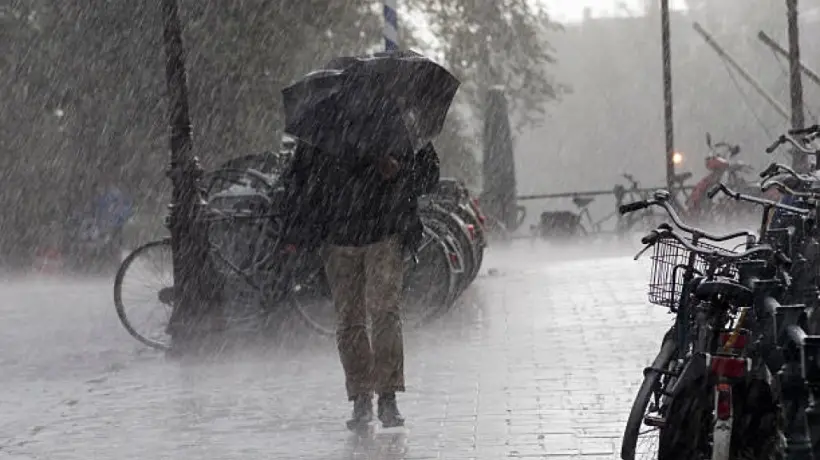
Severe rains in South Korea have resulted in four deaths and the evacuation of over 1,300 residents, prompting a heightened disaster alert. The storm has been deemed a once-in-a-century event by meteorologists.
In the wake of relentless rains battering South Korea, four individuals have lost their lives and over 1,300 have been compelled to evacuate, as authorities caution that these extraordinary weather conditions are predicted to persist. The fatalities include two elderly men in their 80s, with one reportedly attempting to clear floodwaters from his basement when tragedy struck.
The calamitous impact didn't end there. A third individual perished when a wall collapsed onto his vehicle; he had phoned his wife, narrating how his car was being swept away just moments before the incident. A fourth person succumbed to cardiac arrest amid the chaos.
"I couldn't understand how something like this could happen," expressed Kim Ha-min, a cafe proprietor in Gwangju, reflecting widespread disbelief as the region grapples with this intense rainfall for the first time.
Confronted with record-breaking downpours, South Korea's government has escalated the disaster alert status to its maximum level. In Seosan, where rainfall exceeded 400mm in a mere 12 hours, the situation has been described by meteorologists as an event occurring once in a century.
Images circulating online depict submerged vehicles and homes, with household items adrift on the floodwaters. Among those affected, Ms. Kim shared her experience of unprecedented flooding as her cafe was forced to close, "I drained the water, but the smell from the sewers is so bad that I can't open for business." Gwangju recorded a staggering 426mm of rain on Thursday, intensifying residents' fears, given the absence of significant water bodies nearby.
There have been multiple reports of injuries, including instances of hypothermia and cases of leg injuries. As of Thursday afternoon, evacuation efforts had moved 1,300 residents to safer locations.
Authorities have issued urgent advisories for residents to steer clear of riverbanks, inclines, and subterranean spaces, warning that the threat of landslides and flash floods remains prevalent. The unusual weather phenomenon has been attributed to a combination of dry air from the northwest with the warm, moist air mass in the south, forming extraordinarily dense rain clouds.
Despite the deluge, forecasters predict a shift to high temperatures next week, hinting at a potential heatwave on the horizon. As South Korea navigates this extreme weather, Akhbrna News continues to monitor the evolving situation.








Comments
Log in to write a comment