


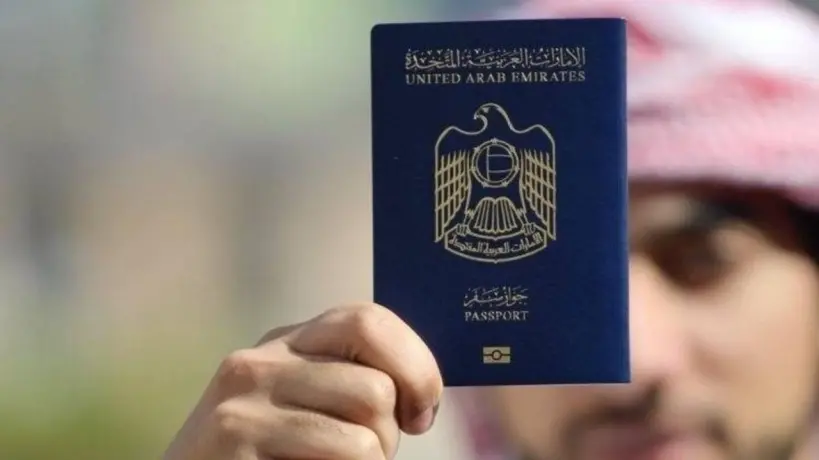
Dubai: Arton Capital's 2025 Passport Index has classified the United Arab Emirates as the world's most powerful passport for the seventh year in a row.
In a year when most major passports lost momentum, the UAE strengthened its leadership, consolidating its position as a key global mobility hub. The country's unrivaled ease of travel, as well as its image as a secure and appealing investment hub, have helped it stay ahead of conventional European and North American leaders.
Armand Arton, CEO of Arton Capital and co-founder of the Passport Index, stated, "The globe is becoming more cautious, and the era of quick reopening following the COVID-19 outbreak has ended. Despite this trend, we see the UAE retaining its dominance and Asian nations emerging as major competitors in the transportation sector."
Following years of relative stability, top Asian passports experienced strong growth in 2025. Singapore made the greatest leap, rising from 30th to second position in the Mobility Index with 175 points, while Malaysia improved from 41st to 17th with 174 points. Despite small decreases, Japan and South Korea maintained their high places, bolstering the region's overall presence near the top of the rankings.
Asia's expanding political power, simplified travel arrangements, and reputation for economic robustness all helped to fuel its fast ascent. "In an era of increasingly restrictive travel, the value of a strong passport increases," Arton told reporters.
European passports continue to dominate the top 20, with Spain, France, Germany, Belgium, and Italy retaining their places as the world's leading passports. However, most of these passports showed a decrease in mobility ratings compared to 2024, falling from roughly 178-179 to around 174 this year.
With nations tightening entrance requirements and increasing visa scrutiny, Europe's historic edge is fading. The area still has the highest-ranked passports in the world, but it is under severe competition from fast rising Asian countries.
The United Kingdom, the United States, and Canada were among the countries that had the most significant reductions in the 2025 rankings. The United Kingdom slipped from 32nd to 39th place, while the United States and Canada slid to 41st and 40th, respectively, losing five visa-free destinations. Australia and New Zealand also saw their ranks drop.
Wealthy residents in these nations are increasingly looking for alternate residence and citizenship alternatives to preserve their global reach.
According to Arton's "Wealth and Elections" poll, an increasing percentage of rich individuals in the UK, US, and Canada are actively considering relocation. According to the survey, high-net-worth people are now prioritizing relocation preparation alongside financial management, creating "national portfolios" to provide stability and independence.
Despite a decline in traditional visa exemptions, 2025 witnessed unprecedented development in digital travel permits. Israel, the United Kingdom, Turkmenistan, St. Kitts and Nevis, and the Maldives have all adopted e-travel permits, while Canada has waived visa requirements for Qatari citizens in favor of e-travel access, making Qatar the second Gulf Cooperation Council (GCC) country to benefit from this system, following the United Arab Emirates.
The Passport Index predicts that more than 25 nations will use e-travel permit (ETA) systems by 2026. The most important shift will occur when the European Union launches the long-awaited ETIAS system, which will encompass visitors from more than 60 nations to the Schengen Area. This approach will position the EU as the world's largest issuer of digital travel permits.








Comments
Log in to write a comment