


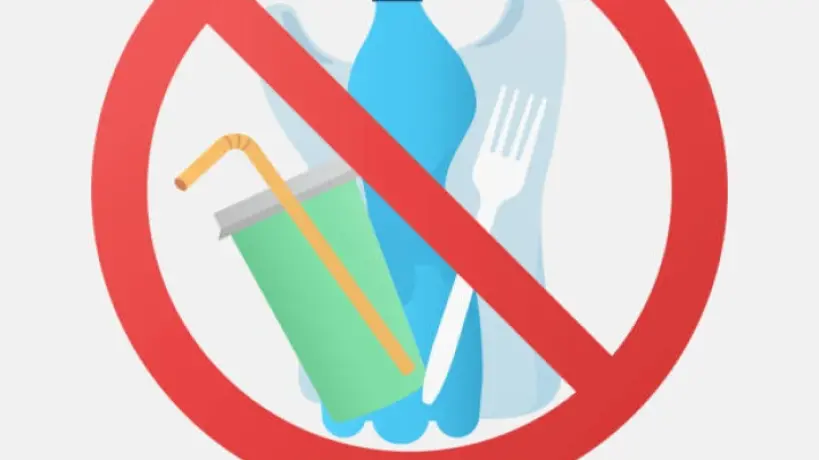
The UAE will launch a big push in 2026 to decrease plastic waste and pollution, including a statewide ban on numerous single-use plastic goods.
Beginning January 1, the government will restrict the import, manufacturing, and sale of a wide variety of single-use plastic products, including drinking cups and lids, cutlery such as spoons, forks, knives, and chopsticks, plates, straws, spoons, and Styrofoam food containers and boxes.
The restriction was previously declared, and on Tuesday, the Ministry of Climate Change and Environment sent a reminder to all enterprises, marketplaces, and suppliers to follow the rules.
"Regulating the use of single-use products is not just about reducing waste; it's part of a comprehensive vision to advance the principles of a circular economy, where resources are transformed into sustainable assets rather than environmental burdens," said Alia Al Harmoudi, Assistant Undersecretary for Sustainable Communities.
"In the UAE, we adopt a balanced approach that prioritizes protecting marine and terrestrial environments from the dangers of pollution, while simultaneously promoting business sustainability and growth."
Ms. Al Harmoudi stated that the government is encouraged by "the strong environmental awareness of Emirati society and the constructive cooperation shown by the private sector, manufacturers, and retailers in adopting sustainable practices and environmentally friendly alternatives."
She went on: "Protecting our environment is a shared responsibility, and every step taken to reduce the consumption of these products is an investment in the well-being of our society and the preservation of our natural landscapes."
The judgment also prohibits single-use bags, regardless of material, if their thickness is less than 50 microns. This ruling will take effect on the same date.
Plastic waste is a growing problem in the UAE and the world.
The effects of plastic waste are becoming more visible in the UAE. In July, the quantity of waste plastic discovered in deceased seabirds was regarded as "very alarming."
In 2022, Dubai officials stated that nine out of ten turtles and five out of 10 camels discovered dead had plastic in their intestines.
According to a research conducted in the UAE, hundreds of camels have perished since 2008 after consuming plastic garbage.
Globally, the issue is far more serious. The OECD predicts that plastic trash will increase to one billion tons per year by 2060.
According to Earth Day, almost five trillion plastic bags and 500 billion plastic cups are used worldwide each year. As a result, the new restrictions have been broadly embraced.
"Building on past successes, such as the ban on plastic bags, which has significantly reduced their use, the UAE is leading the way in sustainable climate action," said Antonios Voloudis, senior director of sustainability and stewardship at NYU Abu Dhabi.
"This new ban will encourage the use of reusable alternatives, promote innovation in sustainable materials, and demonstrate that economic development can go hand in hand with environmental stewardship."
Tatiana Antonelli Abela, founder and managing director of Gombook, a UAE-based social entrepreneurship organization focused to sustainability, described the change as a "crucial step" in the country's transition to a more sustainable future.
"This new measure will not only help protect our ecosystems but will also inspire communities and businesses to adopt more responsible consumption, proving that every ban is a building block toward lasting environmental change," she told the crowd.
The Ministry, in consultation and coordination with its strategic partners from various authorities and agencies around the country, has begun to gradually execute this decision, with the first phase taking effect on January 1, 2024.
This phase forbids the import, manufacture, and distribution of all single-use plastic shopping bags, including biodegradable plastic bags.
The Ministry of Climate Change and Environment, in collaboration and coordination with its strategic partners from the authorities and competent bodies in the country, has begun gradually implementing the decision by activating the first phase, which stipulated a ban on the import, production, or circulation of "single-use plastic shopping bags" of all types, including biodegradable plastic bags, beginning January 1, 2024.






Comments
Log in to write a comment