


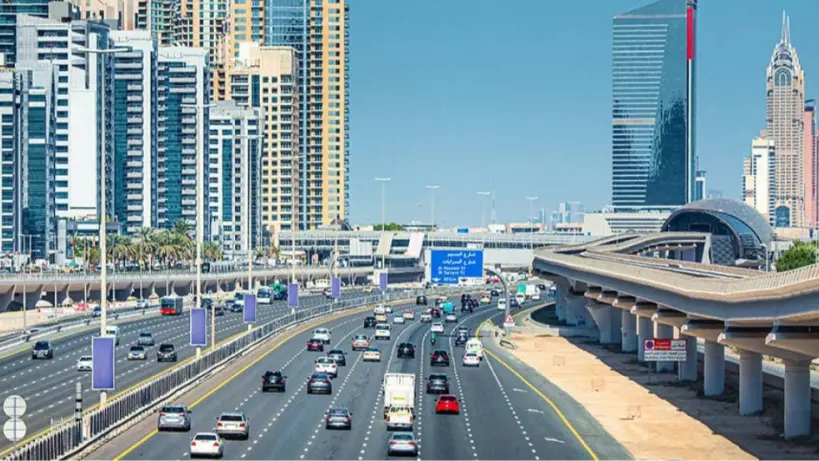
Mattar Al Tayer, Director-General and Chairman of the Board of Executive Directors of Dubai's Roads and Transport Authority (RTA), stated that traffic congestion in the emirate is due to several key factors, most notably the rapid population growth, which has exceeded 6% over the past decade, compared to a global average of 1.1%.
Al Tayer predicted that the daytime population will reach 8 million by 2040. He also noted that the number of tourists in 2024 will reach 18.7 million, a 9% increase over 2023.
He added that Dubai has 2.5 million registered vehicles, representing half of the total number of registered vehicles in the country, placing significant pressure on the road network and infrastructure.
He pointed out that the Dubai government has invested more than AED 150 billion over 19 years in developing the transport sector. The RTA's 2030 plan is based on four main pillars: developing road projects, implementing traffic policies, supporting public transport, and expanding the use of smart systems in traffic management.
He pointed out that driver behavior, multiculturalism, disregard for peak times, and the lack of advance trip planning are among the most prominent challenges leading to worsening congestion.
Al Tayer reviewed some sustainable solutions that have contributed to improving traffic flow, such as the toll system, flexible working hours, and remote work. These solutions have contributed to reducing traffic density on certain roads, such as Sheikh Zayed Road, by 9%.
Regarding future plans, Al Tayer explained that the RTA will implement more than 30 strategic projects over the next three years, at a value exceeding AED 40 billion. These projects include the Dubai Metro Blue Line, which will serve nine major areas and is expected to reduce congestion by up to 20%.
He also revealed the key recommendations of the "Bridges of Communication" workshop, which brought together representatives from 50 public and private entities. The workshop discussed collaborative solutions, including balanced service distribution, staggered working hours, and linking development areas to transportation networks. It also leveraged artificial intelligence and big data analysis to improve decision-making and traffic management.






Comments
Log in to write a comment