


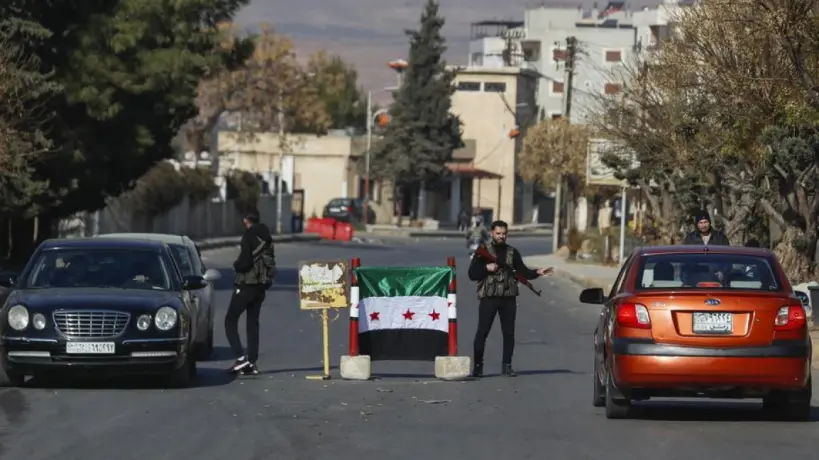
After opposition army toppled President Bashar Assad, Syria's political and social scene changed dramatically, Prime Minister Mohammad al-Jalai verified that several cabinet officials had returned to work, however public sector disruptions in the nation continued.
Adam Abdelmoula, UN Resident and Humanitarian Coordinator for Syria, claims that among the political unrest, government services have come to "a complete and abrupt halt," with many state personnel unable to resume their work.
Abdelmoula underlined the difficulties the disrupted system faces and pointed out that even vital humanitarian activities have suffered. For example, aircraft personnel left their stations, therefore postponing an aid flight loaded with essential medical supplies. Referring to the long-standing control of Assad's administration, Abdelmoula said, "This is a country with known one government for 53 years." He advised that it could take time and assurances from the armed groups now under control for government workers to get back to business.
Significant political events were revealed by rebel forces, including a meeting between departing Prime Minister and Ahmad al-Shaara, commander of the main rebel group HTS (Hay’at Tahrir al-Sham). Talks apparently focused on Syria's political change, therefore indicating initiatives to create post- Assad government. Once a top Al-Qaeda agent, Abu Mohammad al-Golani, the HTS leader has subsequently turned away from radical ideas in favor of a representative government and religious tolerance. This change has spurred debates in Western nations such the United Kingdom and the United States on perhaps eliminating HTS from their lists of approved terrorist groups.
Among Syrians who have been displaced, the change in government gives optimism. Returning from nearby nations, streams of refugees are looking for a peaceful future and are reuniting with loved ones lost under Assad's control. Still, the past leaves sharp wounds. Yearning knowledge about relatives who were imprisoned or vanished under the government, many families assemble outside prisons, security agencies, and courts. Families seeking justice now center the notorious Saydnaya military prison, known for secret killings and torture. By freeing prisoners-including women and children-rebels who broke through the jail exposed the horrors carried out inside its walls. Between 2011 and 2016, Amnesty International believes 13,000 Syrians were slaughtered in Saydnaya.
Monday in Damascus had a cautious normalizing atmosphere, Previously a battlefield, the city was rather peaceful. While some inhabitants confronted the pragmatic difficulties of daily life in a nation experiencing change, others were celebrating the fall of the dictatorship, Public transportation stayed stopped as civilian traffic started once more, As people looked for basic goods among continuous uncertainty, long lines developed at food stores and bakeries.
It is yet unknown how Syria might change under the new government. Now in charge, the rebel coalition must prove trust among a people conditioned to dread authority. Achieving stability depends critically on establishing governance, rebuilding public services, and meeting the needs of war-torn societies, Closely observing these events. the international world is debating how best to assist Syria's rehabilitation while guaranteeing responsibility for previous transgressions of human rights.
Though Syria's road ahead is difficult, for many of its people the fall of Assad heralds a fresh chapter full with wary hope. Families looking for answers, returning refugees, and the larger global reaction to the rebel-led change will define the destiny of this country, The hope for a more inclusive and peaceful Syria rests on the capacity of its new leaders to negotiate these difficult reality while attending to the residual scars of its unhappy past.






Comments
Log in to write a comment