


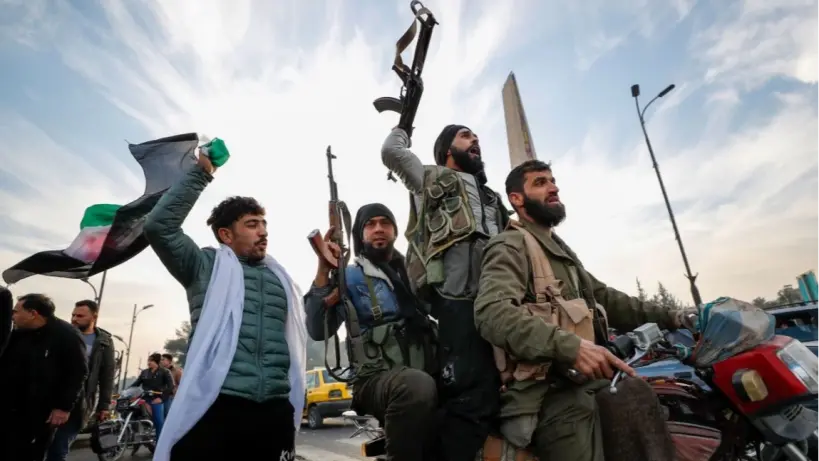
Syrian rebels have announced the removal of President Bashar al-Assad following takeover of Damascus, therefore ending almost 13 years of family rule in a significant event for the Middle East.
Years of terrible civil conflict that tore Syria and resulted in huge displacement and great loss of life before this historic event. Assad's demise also severely affects his main supporters, Russia and Iran, which had been crucial in sustaining his administration during pivotal stages of the war.
Assad's demise came quickly. Syrian rebels broke into Damascus without much opposition from the Syrian army, whose command had already admitted the fall of the government. Assad left the city to an unknown place, although it's not certain if he survived the disorderly retreat. There are rumors of a possible crash based on reports of a Syrian Air airplane carrying him abruptly turning around disappearing. These assertions, meanwhile, remain untested.
Thousands of people in Damascus observed the fall of the government by assembling in the streets, screaming slogans of liberation, and demolishing monuments of Assad's autocratic rule. Thousands of prisoners from Sednaya were also freed by the insurgents, so signifying the end of a period marked by injustice and persecution.
The Syrian rebel coalition has started actions to create a transitional government endowed with complete administrative authority. In a statement, they said Syria has evolved from the fight to topple the Assad government to the phase of creating a united country that respects the martyrs of its people. But considering the several groups engaged in Syria's political and military scene, this transitioning process offers formidable difficulties.
Leader of Hayat Tahrir al-Sham (HTS), Abu Mohammed al-Golani has become rather important throughout the transitional era. Former al-Qaeda affiliate HTS was instrumental in the rebel advance. Even if relations with al-Qaeda were cut in 2016, HTS's impact poses questions especially for Western powers fearful of Islamist movements. To guarantee a smooth transition, Golani allegedly has been in talks with Syria's temporary Prime Minister Mohammad Ghazi al-Jalali.
The fall of Assad's government offers Syria chances as well as challenges. One may say that it signals the end of an oppressive period and presents promise for a fresh beginning. Stabilizing the war-torn country will thus need juggling the interests of several factions, including Islamist parties, Western-backed organizations, and regional powers like Turkey and Russia.
The notable presence of HTS in the rebel coalition has sparked questions over the possibility of imposing strict Islamist rule. Countries like Egypt and the United Arab Emirates, who see Islamist movements as existential dangers, are probably going to oppose HTS's increasing sway. Furthermore underlining the requirement of acquiring Western and regional cooperation for a successful transition are international sanctions on Syria and the necessity of large-scale rebuilding initiatives.
The fall of Assad echoes throughout the Middle East, therefore diminishing Russia's and Iran's power and changing regional alliances. Given his connection with Iran and Hezbollah, Israel, for example, sees Assad's ouster as a triumph. But the possibility of an Islamist-led government in Syria brings fresh complexity and might aggravate neighboring conflicts.
Joyful citizens of Homs and other cities commemorated the fall of the government, therefore signally altering Syria's history. The takeover of crucial center Homs by the rebels strengthens their hold over the core of the nation. Still difficult challenges include stabilizing these areas and controlling the change from war to peace.




Comments
Log in to write a comment