


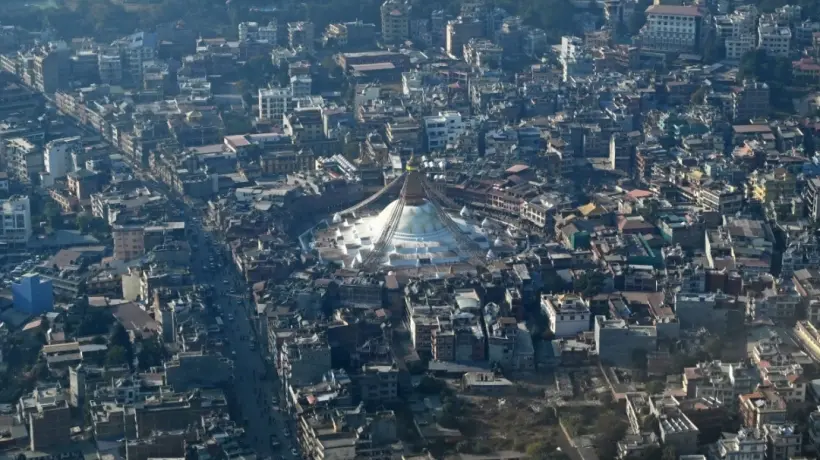
Chinese officials claim that a powerful 6.8-magnitude earthquake hit in Shigatse, one of Tibet's holiest cities, on January 7, 2025, killing at least 126 people and injuring over 188.
About eighty kilometers north of Mount Everest, the highest mountain in the world, the epicenter of the earthquake was found Shaking buildings and sparking general panic, the earthquakes was felt in nearby Nepal, Bhutan, and India. Shigatse's images expose significant destruction of infrastructure and residences. Working to help the injured and evaluate the whole scope of the damage are rescue teams Authorities advise prudence since aftershocks are still a possibility.
The China Earthquake Networks Centre claims that Tingri county, sometimes referred to as the northern gateway to the Everest region, had the epicenter of the earthquake. The earthquake was a shallow and strong seismic event since its depth was 10 km (6.2 miles). Later on the US Geological Service changed the scale to 7.1. Widespread devastation over the area was brought about by the earthquake striking at 9:05 am local time (0105 GMT).
At least 95 individuals were verified killed and another 130 were injured on the Tibetan side. With about 800,000 people living in Shigatse, an area, the damage was widespread including the city of Shigatse, the traditional seat of the Panchen Lama, a prominent religious person in Tibetan Buddhism. Thousands of houses were destroyed, and rescue teams to hunt survivors among the ruins worked nonstop. Video footage by Tibet Fire and Rescue shows rescuers dragging injured people from collapsing structures. Searching the wreckage of homes in hopes of saving additional lives, their efforts were vital.
China's President Xi Jinping ordered all-out search and rescue activities in reaction to the accident to help resettling people impacted by the earthquake and limit more losses. Over 22,000 relief goods, including tents, clothing, and quilts, were delivered to assist survivors; more than 1,500 rescue professionals and firefighters were despatched to the affected districts overall.
The Shigatse area and its environs were among the great distances over which one could feel the vibrations. Tingri, at an elevation of roughly 4,000–5,000 meters (13,000–16,000 feet), saw strong shaking. More than 150 aftershocks followed, some with magnitudes of up to 4.4. Following the primary tremor In Lhatse, a nearby town, the aftermath revealed notable damage, with broken store fronts and trash pouring over the street. Over 1,000 dwellings suffered damage and 27 villages total, spread 20 km from the epicenter were impacted.
Apart from Tibet, other nations also experienced the consequences of the earthquake. About 400 kilometers (250 miles) from the epicenter, Kathmandu, the capital of Nepal, shocked its citizens and caused them to flee their houses in panic. Meera Adhikari, a resident, detailed the horrific event: she first believed her child was causing the shaking, but as her window shook she quickly knew it was an earthquake. Another person hurt in Kathmandu jumped from a rooftop in panic during the quakes. Along with the northern Indian state of Bihar, which borders Nepal, and Thimphu, the capital of Bhutan, the earthquake also impacted.







Comments
Log in to write a comment