


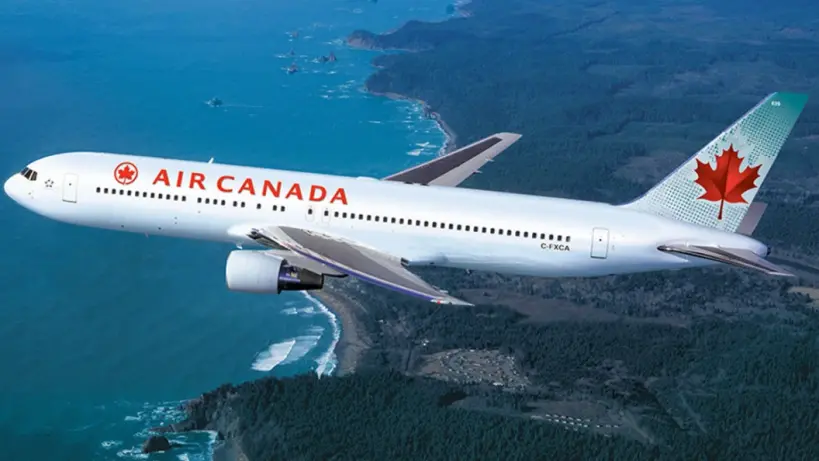
The global disruption has ensued following a strike by over 10,000 flight attendants at Air Canada after failed negotiations with the airline.
Global passengers are experiencing significant disruption following the announcement by the union representing over 10,000 Air Canada flight attendants. The group decided to strike after failing to secure a last-minute agreement with the airline.
The work stoppage officially commenced just before 1 a.m. ET on Saturday.
Keelin Pringnitz and her family from Ottawa were among those impacted, stranded during their return journey from a European vacation due to flight cancellations.
"It was an end-of-my-maternity-leave kind of trip. We traveled to the Faroe Islands in Norway via Air Canada through London," shared Pringnitz while at London’s Heathrow Airport. Her family is now seeking alternative travel arrangements back home.
The airline confirmed all flights under Air Canada and its subsidiary Air Canada Rouge will be suspended amid the strike, affecting roughly 130,000 customers daily as long as the walkout continues.
“Air Canada deeply regrets the impact this strike is having on our customers,” stated the airline early Saturday morning. However, flights operated by third-party airlines Jazz and PAL under Air Canada Express remain unaffected.
Picket lines have been set up at major Canadian airports including Montreal, Toronto, Calgary, and Vancouver. Additionally, striking employees plan to demonstrate at airports in Halifax, Ottawa, and Winnipeg.
The Canadian Union of Public Employees (CUPE), representing Air Canada's flight attendants, announced in an early Saturday press release that negotiations have reached an impasse.
"We are heartbroken for our passengers," CUPE expressed. "Striking was not our goal; neither was being locked out; but it's evident that Air Canada sees no reason to negotiate fairly."
Previously urging intervention from Jobs Minister Patty Hajdu for binding arbitration under Section 107 of the Canada Labour Code, Air Canada's request remains unheeded as Hajdu encouraged both parties back to negotiation without direct intervention.
The minister noted that many union demands seem to have been addressed, indicating potential progress towards resolution. Nevertheless, CUPE opposed arbitration and insisted on bargaining directly instead.
Despite no formal government intervention yet announced, CUPE implied throughout negotiations that federal interference might be forthcoming given past patterns. They accused Air Canada of resisting genuine negotiation efforts possibly anticipating governmental enforcement of terms via a third-party arbitrator under federal labor codes.







Comments
Log in to write a comment