


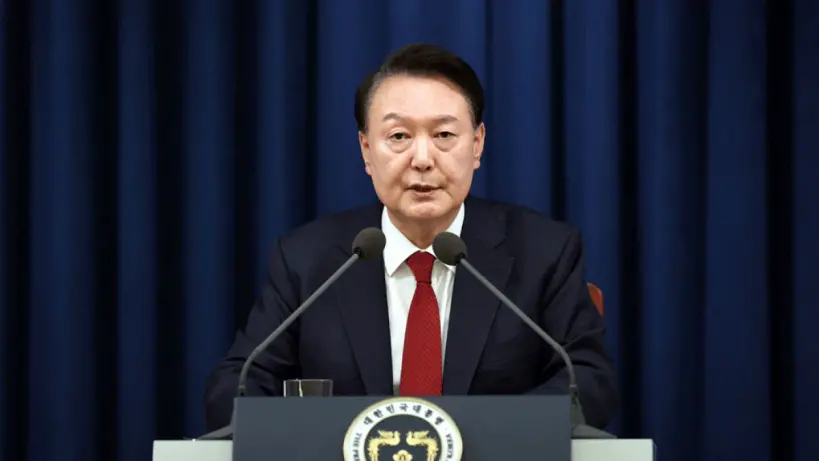
A Seoul court has recently released an arrest warrant for South Korea's suspended president, Yoon Suk Yeol, following allegations of abusing his power and inciting insurrection during a controversial attempt to impose martial law on December 3.
After Yoon neglected to answer three summonses for interrogation over the past two weeks, the warrant follows, fueling more political upheaval in the nation.
Declining the arrest warrant as "illegal and invalid," Yoon's legal team promised to contest it in court. This is the first instance in South Korean history that a sitting president has encountered an arrest warrant. Investigators have until January 6 to carry out the warrant execution; they have an opportunity to ask for an extension. Still, questions surround whether the warrant can be executed given possible opposition from Yoon's security crew and allies.
Yoon's brief martial law declaration, which was sharply attacked and resulted in his impeachment by parliament, started the political crisis. On December 14, Yoon was suspended from presidential responsibilities awaiting a constitutional court ruling. With just six of the nine judges on South Korea's constitutional court right now, a single dissenting vote might stop Yoon from being removed from office.
Acting prime minister Han Duck-soo opposed attempts last week to name three more judges to the panel, further aggravating the impasse. Initiating Yoon's impeachment, the opposition later voted to impeach Han, who had taken over following Yoon's suspension. Currently as both acting prime minister and acting president, finance minister Choi Sang-mok is under consideration similar action.
With Yoon's private house under court-approved inspections and the presidential security force already barring investigators from entering the presidential office, the arrest warrant has heightened tensions. Historically, high-profile political personalities have been difficult for South Korean authorities to capture; typically, their fans and aides physically object.
Yoon's lawyers contend that since investigators lack jurisdiction to arrest him, his choice to declare martial law falls within the constitutional authority of the presidency. Declaring that the martial law proclamation was required and committing to "fight to the end," Yoon has openly justified his actions while noting his political and legal obligations.
Yoon defies, although he stays under a travel ban and his exact whereabouts is unknown. The nation still struggling with the political unrest brought on by Yoon's activities meanwhile. The impeachment of Yoon and his acting successor by Parliament emphasizes the continuous power struggle without any settlement in mind.
Lack of a full bench begs issues over the outcome as the constitutional court gets ready to review Yoon's impeachment. The political opposition faces challenges in the form of internal strife and vetoes of important court selections, although it aims to persuade the court in favor of Yoon removal.
With public confidence lost and governmental leadership in flux, this unparalleled scenario has left South Korea in a critical junction. The events that are developing will not only decide Yoon's political destiny but also set a standard for handling constitutional problems in the country's future.







Comments
Log in to write a comment