


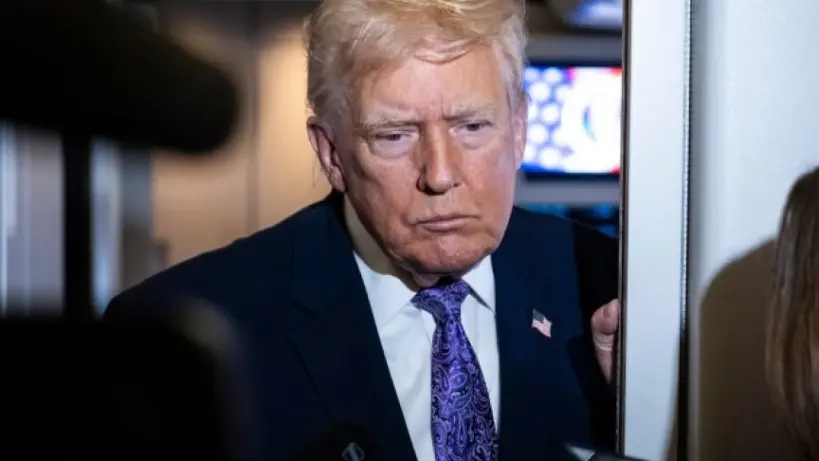
Reports indicate that Venezuelan President Nicolás Maduro rejected a direct “ultimatum” from U.S. President Donald Trump, who demanded that he step down from power immediately during a phone conversation between the two leaders.
At the same time, U.S. Secretary of Defense Pete Hegseth faced congressional scrutiny over allegations that he ordered a second strike on a boat in the Caribbean Sea, resulting in the deaths of two survivors of an earlier attack.
President Trump confirmed on Sunday that such a phone call had taken place, telling journalists: “I won’t say it went well or badly. It was simply a telephone call.”
Both the U.S. and Venezuelan governments have refrained from providing further details about what was discussed during this rare exchange, which is believed to have occurred on November 21.
However, according to the Miami Herald, Trump delivered a "clear message" to Maduro amid an ongoing pressure campaign lasting four months-including the deployment of substantial naval forces off Venezuela’s northern coast.
The newspaper reported that Trump told Maduro: “You can save yourself and your closest family members, but you must leave the country now,” offering safe passage for him, his wife, and son only if he agreed to resign at once.
In response, Maduro reportedly declined to relinquish power immediately and instead put forward several counter-demands-such as international immunity from prosecution and retaining control over the armed forces while ceding political authority.
The Miami Herald further reported that Maduro requested another phone call with Trump over the past weekend; however, Trump announced instead the "complete closure of Venezuela's airspace."
No other direct contact has been made public between them since then. According to sources cited by the paper, Brazil, Qatar, and Turkey helped mediate their initial discussion.
Despite reports of Trump's final ultimatum to Maduro, numerous analysts doubt that Washington would back up such threats with large-scale military intervention.
The Wall Street Journal quoted a source who regularly communicates with senior Venezuelan officials as saying: “Maduro and most of his allies consider these U.S. military threats nothing more than a bluff.”
The source noted that since coming to power in 2013, Maduro has survived several major crises-including former President Trump's "maximum pressure" campaign during his first term; multiple rounds of mass protests; economic collapse; an assassination attempt in 2018; and what many view as defeat in last year’s presidential election by former diplomat Edmundo González.
An editorial published Sunday by The Wall Street Journal called for continued escalation against Venezuela by the Trump administration, arguing that “removing Maduro serves America’s national interest.” It warned: "If Maduro refuses to go-and Mr. Trump backs down-it will be Mr. Trump and America’s credibility that suffer."
Seeking peaceful resolution options, Colombian President Gustavo Petro has proposed hosting talks between Maduro’s government and opposition figures in Cartagena.
Meanwhile-in an official letter released through Venezuelan state media on Sunday-Maduro accused Washington of seeking "to seize Venezuela’s vast oil reserves-the largest on earth-through deadly military force."
Scrutiny Over Hegseth
Amid these diplomatic tensions abroad, U.S. Defense Secretary Pete Hegseth faces bipartisan scrutiny over issuing an order for a second strike on September 2 against a boat in Caribbean waters-killing two survivors clinging to debris after an initial attack.
The Washington Post reported Hegseth gave instructions to “kill everyone” because the first strike-one among more than twenty similar operations-did not immediately eliminate all eleven occupants aboard; special operations commanders overseeing the mission therefore authorized another attack.
Certain Democrats-and one leading Republican-suggested this action could constitute a war crime. Top Republican Armed Services Committee chairmen from both houses promised strict oversight regarding this incident.
House Armed Services Chair Mike Rogers (Republican) and Democratic Rep Adam Smith stated jointly: “We take very seriously reports about subsequent strikes against alleged drug-running vessels under Southern Command jurisdiction-and are launching bipartisan efforts for a full report on this operation.”
The Senate Armed Services Committee leaders-Republican Senator Roger Wicker and Democrat Jack Reed-noted investigations are underway at the Department of Defense: “We’ve directed inquiries into this matter and will exercise rigorous oversight until all facts about its circumstances come to light.”
Former House Intelligence Chair Mike Turner agreed with Democratic Senators Chris Van Hollen and Mark Kelly-who argued striking unarmed individuals appeared unlawful.
For his part, President Trump expressed strong confidence in Secretary Hegseth when questioned by reporters and noted Hegseth denied ever giving such orders: "He told me he never said any such thing-I believe him completely."




Comments
Log in to write a comment