


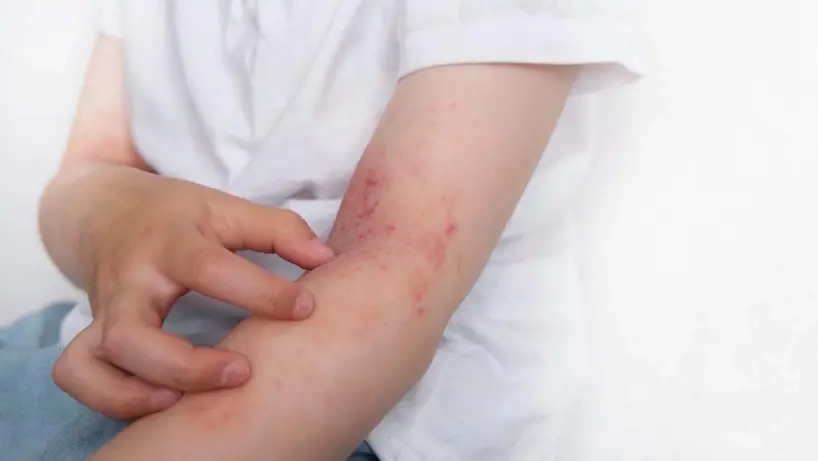
Healthcare specialists have seen a notable rise in patients with skin problems including extreme dryness and breakouts as temperatures fall across the United Arab Emirates during the winter.
Experts link this trend to variations in atmospheric pressure, wind patterns, and humidity reduction all of which aggravate skin sensitivity and irritation.
Among the several impacted people is nine-year-old Mahmoud Wahdan, who has had ongoing dry and itchy skin. Mahmoud kept having stiffness and rough areas even if his parents tried to keep his skin moistened with lotions and creams, At night, the soreness was very noticeable and usually made it challenging for him to fall asleep, As Mariam, his mother, observed red, itchy, and inflammatory patches covering his arms and legs, she grew more worried.
Mahmoud's doctor examined him closely and diagnosed him with atopic dermatitis, a persistent skin disorder prone to flare-up in dry and cold months. Young children especially find the disorder distressing since it is marked by redness, itching, and inflammation.
Similar circumstances surround seven-year-old Moosa, a Maldivian expatriate who has battled dry and itchy skin from early life. Haniya, his mother, noted that Moosa's state worsened every winter. worried about the way scaly spots on his arms looked, she asked a doctor. Luckily, doctors found no evidence of an infection and the irritation was mostly brought on by excessive dryness, The doctor encouraged Moosa to make sure she routinely utilized moisturizers, particularly following a bath a habit many kids find difficult.
Medical professionals have clarified that a mix of environmental and behavioral elements causes the increase in skin-related problems throughout the winter season, General practitioner specializing in aesthetics at International Modern Hospital Dubai, Dr. Shahrzad Mojtabavi Naeini, observed that the decline in humidity during winter dries the skin and causes the body to create too much oil. Clogged pores and outbreaks follow from this. Furthermore aggravating sensitive and acne-prone skin is the rising dust in the air.
Common comfort in frigid months, hot showers also aggravate the issue by depriving the skin of its natural oils, therefore aggravating dryness and irritation. Reduced water intake in cooler seasons causes dehydration, which aggravates the problem and increases the sensitivity of the skin and cracking susceptibility of it.
Dr. Haider Ali, a family medicine specialist at Saudi German Hospital Dubai, underlined still another significant element: less sunlight during winter. One of the main sources of vitamin D, an important nutrient supporting skin function and inflammation regulation is sunlight. The skin is more likely to be irritated and breakouts deprived of enough vitamin D.
Moreover, dry skin tries to compensate by creating too much oil. For those already prone to skin issues, this overproduction can cause clogged pores and acne development, posing still another difficulty.
Several preventive actions advised by doctors assist fight winter-related skin issues. Maintaining skin hydrated depends on constant application of emollients and moisturizers. Professionals counsel indoor humidifier use to control moisture levels and avoid too dry conditions.
People should also avoid long, hot showers and strong soaps since they might rob the skin of its natural protective barrier. Dermatologists advise instead to choose lukewarm showers and to use mild cleaners. Applying sunscreen is still absolutely important even with the colder temperatures since winter sun can still cause skin harm.
Nutritionally, diets high in omega-3 fatty acids can aid to preserve good skin. Another essential is keeping good hydration by drinking enough water, Patients should see their doctors for customized medical interventions in cases where symptoms continue or get worse.








Comments
Log in to write a comment