


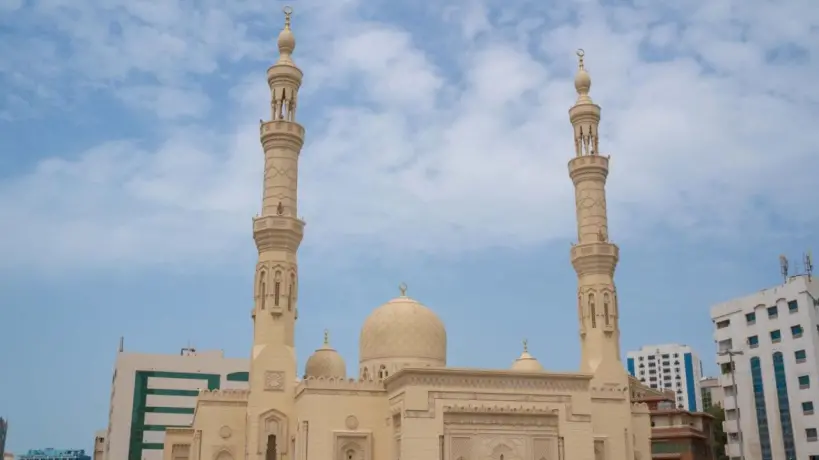
Sharjah has selected 93 mosques to particularly serve non-Arab populations in an effort to foster religious tolerance throughout all spheres of life. This action seeks to give inclusive religious education and spiritual involvement a stage, therefore strengthening the feeling of community and belonging among many different people.
Of the assigned mosques, 74 are situated in Sharjah city; the remaining 19 are spread over the central area, with 10 mosques, and the eastern region, which features nine mosques. This deliberate distribution guarantees that many of the population have access to religious services meeting their linguistic and cultural demands.
Conducted in multiple languages, the mosques will present a range of instructional activities, including lectures, discussions, and Friday sermons. Services in English, Urdu, Malayalam, Pashto, and Tamil will let people from many backgrounds interact with Islamic teachings in a language they speak comfortably, Sharjah's dedication to inclusivity and respect of the many communities living inside its boundaries are shown in this bilingual approach.
Head of the Sharjah Islamic Affairs Department Abdullah Khalifa Al Sebousi underlined that this project is a component of a more general plan to maximize the influence of the Friday sermon, For teaching worshippers information, values, and manners, the sermons will be absolutely essential. Through emphasizing both religious teachings and useful life skills, the mosque initiatives seek to inform participants about many facets of life, including both spiritual and pragmatic ones.
The project emphasizes the need for leveraging religious venues to promote more respect and understanding between many cultural groupings. Sharjah is significantly trying to guarantee that every member of the community can fully engage in religious life by giving access to religious knowledge in several languages, This strategy not only helps people grow personally but also builds the social fabric of the society by encouraging harmony among its several people.
Moreover the project fits Sharjah's larger objective of educational and cultural growth. The emirate has long been known for its dedication to the arts, education, and cultural projects; this most recent action enhances on that tradition. Sharjah is not only attending to spiritual needs but also promoting a lifetime of learning and personal development by including religious education into its community projects.
It is predicted that as the program develops, it will be rather important in improving the religious understanding of non-Arab Sharjah residents, The availability of instructional materials in several languages will enable people to learn about Islamic ideas, therefore promoting a closer knowledge of the religion. This information can help to close cultural barriers and promote communication across many groups, therefore fostering a more harmonic society.
Moreover the program helps participants enhance their spiritual lives. Through conversations and courses catered to their language choices, worshippers can establish closer connections with the Islamic teachings, Especially the Friday sermon will be used as a potent tool to inculcate moral principles and ethics, so directing people in their everyday contacts with others.
Sharjah's classification of 93 mosques for non-Arab populations represents a major step towards advancing religious education and inclusivity inside the emirate. The project is to empower different communities and promote a better knowledge of Islam by offering educational programs in several languages. Under Abdullah Khalifa Al Sebousi's direction, this initiative shows Sharjah's will to strengthen relationships with its people and improve their spiritual lives, The curriculum has the potential to produce a more harmonic and informed society in which people from all backgrounds may learn, grow, and interact meaningfully with their faith.

Comments
Log in to write a comment