

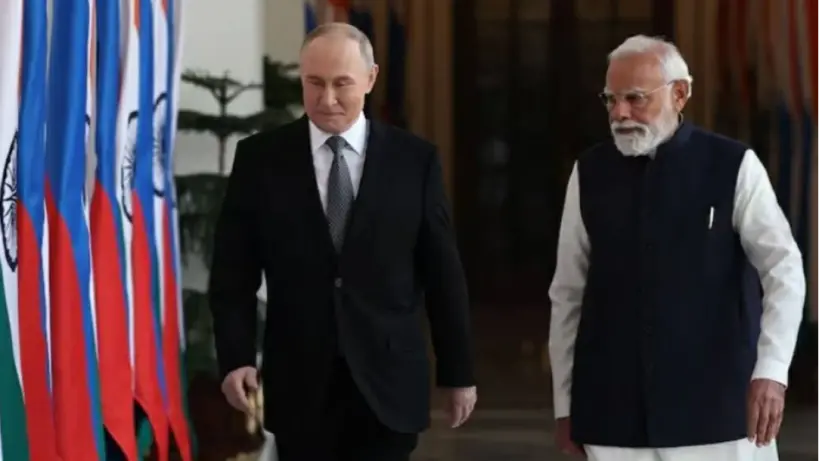
Russian President Vladimir Putin has pledged Moscow’s readiness to provide uninterrupted fuel shipments to India, as New Delhi comes under mounting pressure from the United States to curtail its imports of Russian oil.
Standing alongside Indian Prime Minister Narendra Modi in Delhi, Putin questioned the rationale behind punishing India for purchasing Russian oil. He pointedly referenced American imports of Russian nuclear fuel. “If the US has the right to buy our fuel, why shouldn't India have the same privilege?” he asked during remarks at a joint appearance.
Tensions over energy trade are only one facet of broader strains between Washington and New Delhi. Former President Donald Trump imposed 50% tariffs on most Indian products, arguing that India’s ongoing purchases of Russian oil effectively helped finance Moscow’s war in Ukraine-an accusation firmly denied by Indian officials. Tariff disputes have driven relations between India and the United States to an all-time low, as both sides struggle to resolve their differences.
Putin’s trip coincided with renewed diplomatic activity by the US, which has been engaged in talks with both Russia and Ukraine in pursuit of a negotiated end to the conflict. On Thursday, Putin told India Today that Russia was actively working toward a peaceful solution. However, he cautioned that unless Ukrainian forces withdrew from Donbas, Russia would move to seize the territory by force. “Either we liberate these territories by force, or Ukrainian troops will leave these territories,” he said.
Prime Minister Modi reaffirmed India's position during their discussions: while not neutral on Ukraine, his government stands unequivocally "on the side of peace," and supports efforts aimed at securing a lasting settlement. Boosting connectivity between Russia and India remains a top priority for Delhi, Modi noted.
The White House's escalating tariff measures began with an initial 25% rate before being doubled as a punitive response to India's continued energy ties with Russia a step labeled "unfair" and "unjustified" by Indian authorities at the time. Meanwhile, despite Western sanctions rhetoric, Bloomberg reported last September that Russia remained America’s largest supplier of nuclear reactor fuel in 2024; only recently did Congress enact legislation banning enriched uranium imports from Moscow.
Bilateral cooperation extended beyond energy talks this week. Friday’s briefing saw leaders exchange memorandums outlining mutual priorities across sectors such as trade and agriculture. Modi announced two new visa-on-arrival schemes for Russian tourists and shared news of newly opened Indian consulates in Russia. Additionally, state-backed broadcaster Russia Today will launch operations inside India.
No major defense agreements emerged from this visit, but officials confirmed deals covering shipbuilding as well as investment initiatives in civil nuclear power and critical minerals development. Both countries formalized an economic partnership program running through 2030 spanning jobs creation, shipping infrastructure projects and growth within healthcare industries.
Looking ahead, Putin expressed confidence that annual bilateral trade could climb from $60 billion currently to $100 billion within several years. Modi described “energy security” as a cornerstone of Indo-Russian relations but stopped short of naming crude oil specifically.
India now ranked third among global crude consumers dramatically increased imports from Russia after Moscow launched its full-scale invasion of Ukraine in 2022; yet some Indian refiners have since scaled back orders amid tightening U.S.-imposed sanctions targeting Russian exports.
Moscow also reaffirmed its commitment to helping build what is set to become India's largest nuclear power plant a flagship project highlighted by Putin during his visit.
A joint statement released after talks spoke of reorienting strategic partnerships towards collaborative research as well as indigenous production of next-generation defense platforms. Putin concluded by emphasizing deepening foreign policy coordination within Brics the coalition bringing together Brazil, Russia, India, China and South Africa as part of aspirations for what he called a more just and multipolar international order. Since its formation in 2006, the group has consistently positioned itself as a counterweight challenging North American and Western European dominance over global affairs.
Comments
Log in to write a comment