


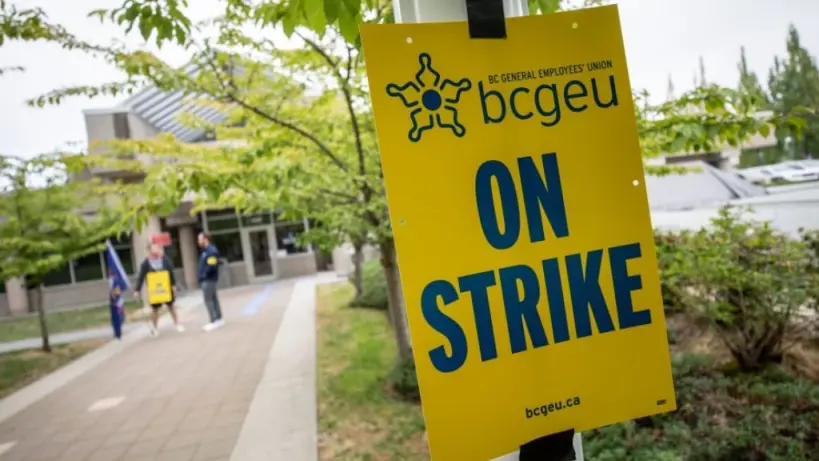
The ongoing strike by the BC Civil Service Union has entered its third week, creating ripple effects across various public service sectors and sparking widespread concern among stakeholders.
The British Columbia Civil Service Union's ongoing strike has continued into its third week, amplifying tensions between union representatives and government officials.
This prolonged industrial action has led to significant disruptions across numerous public service sectors, including education, healthcare, and transport, resulting in a growing sense of unease among citizens and policymakers alike.
Background of the Strike
Originating from unresolved disputes over wage increases and working conditions, the strike commenced after months of negotiations failed to yield satisfactory outcomes for union members.
The union asserts that its demands for fair pay adjustments are reasonable given the rising cost of living and increased workload pressures on civil servants.
Conversely, government officials have cited fiscal constraints as a barrier to meeting these demands fully.
“Our members have been patient and understanding through challenging economic times,” stated Jennifer McKnight, spokesperson for the union.
“However, it is vital that they receive compensation reflective of their dedication and effort.”
Impact on Public Services
The strike has significantly affected public services in British Columbia. Educational institutions are experiencing operational challenges as non-teaching staff participate in demonstrations, leading to closures or reduced hours at many schools.
Parents express growing concern over educational disruptions during an already tumultuous academic year due to pandemic-related adaptations.
The healthcare sector is not immune either; administrative delays in hospitals and clinics have been reported owing to reduced staffing levels.
While emergency services remain unaffected directly due to their classification as essential workers, ancillary support systems are experiencing considerable strain.
Transport services continue encountering hurdles too with several transit routes operating on limited schedules.
Commuters rely heavily on timely services being faced with delays raise frustrations amid daily routines further complicating personal schedules.
Government’s Response
The provincial government acknowledges the inconveniences experienced by residents but stresses its commitment towards reaching a resolution conducive for all parties involved.
In recent statements released by Finance Minister Colin Jameson highlighted initiatives underway aimed at accommodating some union demands within budgetary allowances without compromising fiscal responsibilities committed previously.
“We recognize this situation presents challenges,” remarked Minister Jameson during a press conference held earlier this week.
“Our priority remains maintaining sustainable public finances while ensuring our workforce receives fair treatment.”
Civic Reactions
Citizen groups organized peaceful rallies demonstrating solidarity with striking workers emphasizing importance attributed towards equitable treatment across employment strata form part larger discussion surrounding labor rights protection seen nationwide similar circumstances arise other regions Canada globally reflecting socio-economic complexities inherent modern-day labor relations dynamics involving collective bargaining processes despite difficult economic backdrop faced societies today universally acknowledged complexity human resource management entails balancing interests multiple stakeholders effectively paramount success resolving industrial disputes amicably ensuring continuity critical societal functions dependent secure reliable civil infrastructure frameworks embedded local national governance structures integral developing economies worldwide operational efficiency augmented productive employee engagement happiness ultimately contributing long-term prosperity development inclusive progress overarching societal goals aim achieve where possible harmonious coexistence attained mutual respect understanding collaboration prevailing attitudes foster constructive dialogue exploration innovation shared objectives realizations ambition achieved consequently shaping future generations inherit stable thriving communities benefit contributions predecessors empowering future forward-thinking generations lead enriched fulfilling lives serve testaments positive legacies cultivated pursued passionately earnestly concerted efforts generation leaders visionaries dedicated common good above all else








Comments
Log in to write a comment