

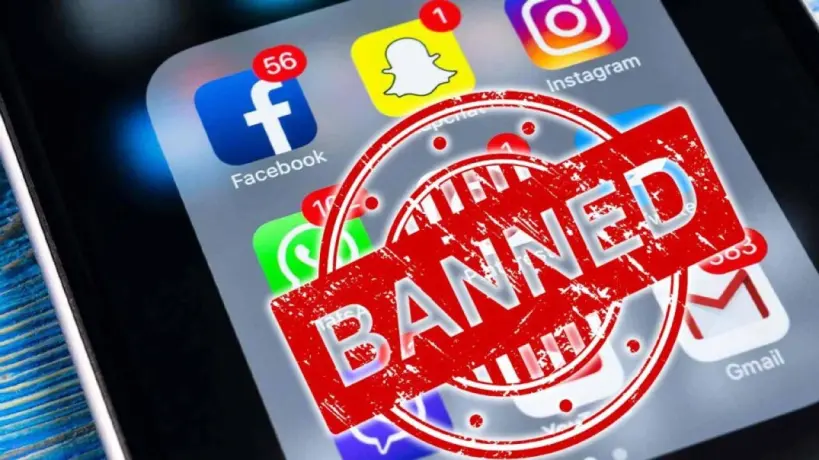
The Australian government has officially announced the implementation of the world's first ban on social media for children under the age of 16.
This new decision by the Australian government has sparked considerable debate regarding its implementation, with many users wondering how the ban will be enforced, what will happen to existing accounts, and what users can do if they are blocked by mistake.
What is the social media ban in Australia?
The ban is scheduled to officially take effect on December 10, 2025. Platforms subject to the ban will be required to deactivate accounts of users under 16 and prevent the creation of new accounts until they reach the legal age.
The social media ban also applies to minors, and all social media users in Australia may be required to verify their age, a process that could be lengthy and complex.
Furthermore, the eSafety Commissioner must be satisfied that the platforms have taken "reasonable steps" to prevent those under 16 from accessing their services.
Failure to comply could result in fines of up to AU$49.5 million.
Which platforms are banned in Australia?
The initial list of banned platforms includes:
- TikTok
- Snapchat
- X (formerly Twitter)
- YouTube
- Twitch
- Kik
- Threads
It's also worth noting that other platforms may be added if children migrate to alternative apps, such as Lemon8, which has raised similar security concerns.
Which platforms are exempt from the ban in Australia?
It should also be noted that some platforms may be exempt from this decision, such as Roblox, Pinterest, YouTube Kids, Discord, WhatsApp, Lemon8, GitHub, LEGO Play, Steam & Steam Chat, Google Classroom, Messenger, and LinkedIn.
The list currently does not include educational, employment, or low-risk platforms, although future changes may be made.
How does age verification work?
The platforms are in charge of establishing age verification methods.
The government states that identity verification should not be the exclusive technique.
Snapchat will employ behavioral clues and birthdates, but TikTok will use a multi-layered approach that combines technology and human evaluation.
Kik will employ a similar K-ID technology.
YouTube will use Google account age and other indications. Facebook and Instagram have yet to publish their approaches.
What happens to accounts under sixteen?
Teenagers on Facebook and Instagram may export their data, archive material, and cancel their accounts until the age of 16.
TikTok allows users to cancel or delete their accounts, as well as archive information.
Snapchat will permit account freezes and content downloads for about 440,000 Australian users aged 13 to 15. Users can recover access if they reach the age of 16.
Appeal Against Incorrect Age Classification
Users above the age of 16 who were wrongly classed as minors can file an appeal.
On Meta platforms, age verification may include a Yoti selfie video or a government-issued ID.
Snapchat accepts verification via bank card, government-issued ID, or K-ID face recognition. TikTok also has several appeal possibilities.
Delay and Legal Challenges
Legal disputes are continuing. John Ruddick, a Liberal MP, launched a challenge in the High Court invoking political speech rights.
A legislative committee proposed suspending the bill until June 2026, but several senators objected, and the Prime Minister and Minister of Communications did not delay its implementation.
Will the ban be completely imposed on December 10?
Authorities warn users not to anticipate rapid adoption.
Platforms will be allowed a grace period to comply, with enforcement targeting high-risk platforms with a significant number of underage users.
The eSafety Commissioner, Julie Inman Grant, stressed a gradual, risk-based approach to deployment.







Comments
Log in to write a comment