


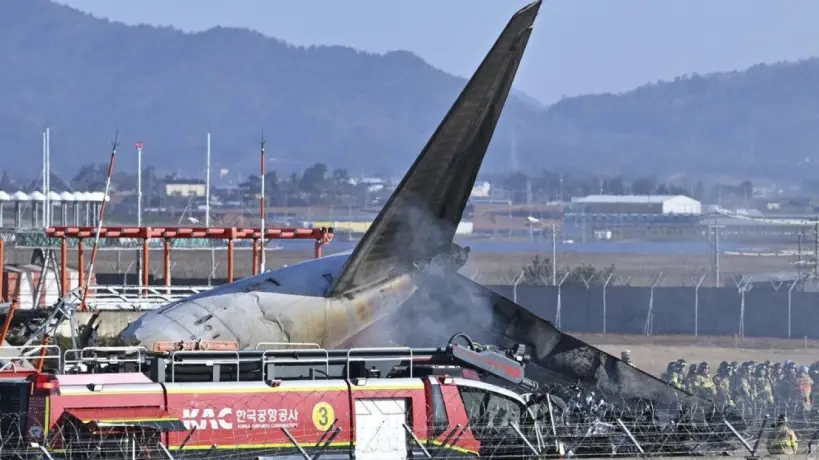
South Korea experienced its deadliest air disaster on Sunday when Jeju Air flight 7C2216 crashed during a landing attempt at Muan International Airport.
The worst aircraft crash in the history of the country lost at least 177 lives. Arriving from Bangkok with 175 passengers and six crew members, the Boeing 737-800 belly-landed on the runway, burst into flames, and ran into a wall.
The mishap happened soon after local time's 9 a.m. Before the crash, video footage saw the aircraft rolling down the runway without any apparent landing gear. The impact produced a huge explosion that dispersed flames and rubble all around. Except for bits of the tail portion, rescue personnel said the wreckage was essentially unidentifiable.
Pulled from the tail section, two crew members-a man and a woman-are undergoing treatment for medium to severe injuries. Officials verified that the two surviving passengers are probably deceased. Soldiers help search teams looking for people possibly thrown from the aircraft during the crash.
Authorities look at possible causes including a bird attack and bad weather. According to Yonhap News Agency, a bird attack warning was sent just before the disaster, maybe causing a landing gear breakdown. The transport ministry claims the pilots called a mayday before trying to land.
Scenes of suffering played out at the airport as family members of the victims assembled to await word. Many were spotted hugging and crying while Red Cross personnel laid blankets. The sad tone was enhanced by officials reading aloud the names of 22 victims found by fingerprint analysis. A makeshift morgue was set up, and mortuary vans queued to transfer the dead. The absence of thorough updates infuriated family members; one relative complained, "My older brother died, and I don't know what's going on." Saying "We are not monkeys in a zoo," another begged reporters for privacy.
The crash site offered a terrible scene. As personnel in protective gear sieved through the rubble, the scent of blood and aviation fuels pervaded the scene. Notwithstanding their best efforts, the degree of the damage caused made recovery activities challenging. Soldiers underlined the seriousness of the tragedy by searching surrounding bushes for more dead.
In over three decades, this incident ranks as the worst involving a South Korean airline and the deadliest air accident in South Korea. It has raised questions about aviation safety once more, especially with relation to emergency readiness and bird strikes. As the inquiry is under way, the transportation ministry is under strain to solve these problems.
While the country laments this terrible loss, focus turns to enhancing security protocols to stop such events going forward. This catastrophe reminds us solemnly of the weaknesses in contemporary aviation and the great influence such disasters have on societies. The memories of the victims and the knowledge gained from this catastrophe will surely influence South Korea's aviation regulations going forward for many years.






Comments
Log in to write a comment