


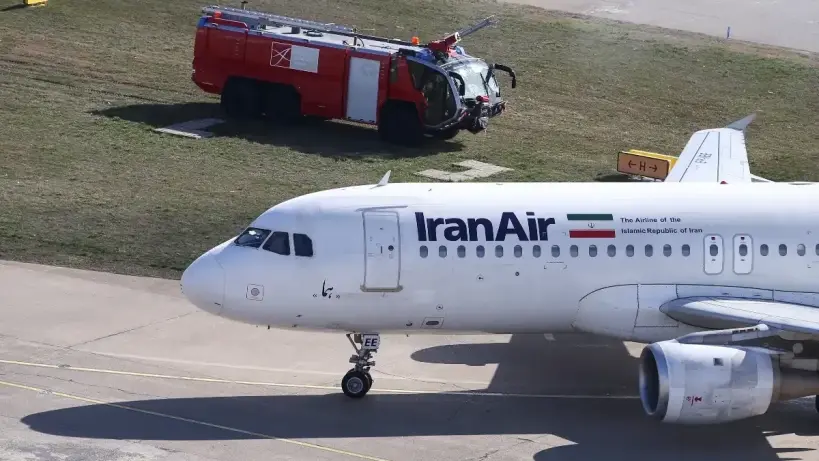
The Mehr news agency said that all flights out of Iranian airports were canceled between 9 p.m. on Sunday and 6 a.m. local time. A spokesman from Iran's Civil Aviation Organization announced this temporary halt, citing operational constraints but offering no more particular information on the grounds behind the decision.
According to the Mehr news agency of Iran, flights from all of the airports have been banned from 9 p.m. on Sunday to 6 a.m. local time. Although the Iranian Civil Aviation Organization's spokesman did not provide any information, the cancellations are ascribed to operational constraints.
This flight disturbance tracks a sequence of rising regional tensions. Iran imposed similar limitations last Tuesday when it started a missile attack aimed at Israel, further aggravating the already existing tensions between the two countries. Israel has promised to respond for the strikes, which increases anxiety all throughout the country.
The continuous strife results from the larger struggle between Israel and Hamas. Following Israeli bombings on Gaza one year following the October 7 attack by Hamas on Israel, the situation has resulted in a terrible death toll in Gaza-roughly 42,000 casualties. Iran and Lebanon among other players have entered the fight as this violence has turned into a more extensive regional clash.
Iran's Revolutionary Guards Corps fired missiles at Israel on Tuesday. Two significant incidents led to the attack. First last week the Israeli forces apparently murdered Hezbollah leader Hassan Nasrallah. Second, a blast in Tehran took the life of important Hamas leader Ismail Haniyeh, many in Iran attributed to Israel.
Many Israelis were driven to hide during Iran's missile onslaught. The Israeli military claimed,meanwhile, that many Iranian missiles had been effectively intercepted. Israel and its neighbors, including Jordan, Iraq, and Lebanon, closed airspace in reaction to the incident. Although some of these airspaces reopened thereafter, the temporary closures highlighted the gravity of the matter.
The missile strikes of Iran and the rocket fire of Hezbollah into Israel heightened worries about a more general regional conflict. Since Hezbollah showed cooperation with Hamas and the Palestinian cause, its activities closely matched the October 7 strikes. Iran, for its part, has made it abundantly evident that it is ready to keep fighting the war should it be required, ready for any possible reprisal from Israel.
This latest escalation has aggravated already unstable Middle Eastern conditions and generated questions over possible military intervention. Iran and Israel are both on great alert as tensions keep rising, each side considering its next moves in the continuous battle. Missile strikes, airline cancellations, and airspace restrictions mirror the growing hostilities and regional effects of the Israel-Hamas conflict.






Comments
Log in to write a comment