

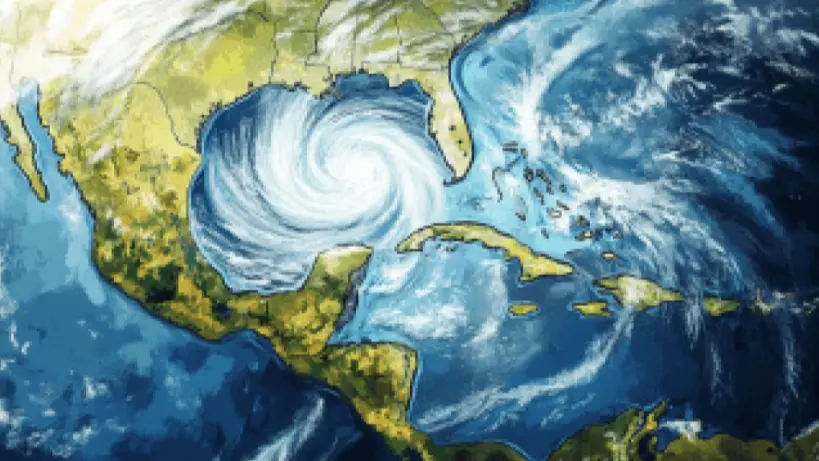
Google's new AI accurately predicted Hurricane Erin's track and intensity.
In the early days of June, just as the Atlantic hurricane season commenced, Google introduced an innovative model aimed specifically at predicting the trajectory and strength of tropical cyclones.
This new tool, part of the Google DeepMind collection of AI-driven weather research models, emerged with a touch of intrigue among meteorologists. Upon its release, Google's assurances were promising. The AI model was trained on an extensive dataset that reconstructed historical weather patterns and included a specialized database containing crucial details about hurricanes' paths, intensity, and dimensions. During initial trials prior to its public unveiling, it displayed commendable performance.
"Our internal tests indicate that our model’s forecasts for cyclone tracks and intensity match or surpass those provided by existing physics-based methods," stated the company confidently.
Google announced a collaboration with the National Hurricane Center-part of NOAA-that has long delivered reliable forecasts, to evaluate how well this Weather Lab model performs across both the Atlantic and Eastern Pacific basins.
The Spotlight on Erin
Up until recently, the Atlantic hurricane season had been relatively uneventful with overall activity below typical levels; hence there hadn't been significant opportunities to test this groundbreaking model. However, just over a week ago, Hurricane Erin rapidly gained momentum in the open Atlantic Ocean. It reached Category 5 status as it traveled westward.
From a forecasting viewpoint, although it was evident that Erin wouldn't directly impact the United States mainland, precise predictions remained critical. Given Erin's substantial size, meteorologists closely monitored its proximity to the U.S. East Coast-which ended up leading to considerable beach erosion-and assessed potential effects on Bermuda's small island community in the Atlantic.








Comments
Log in to write a comment