


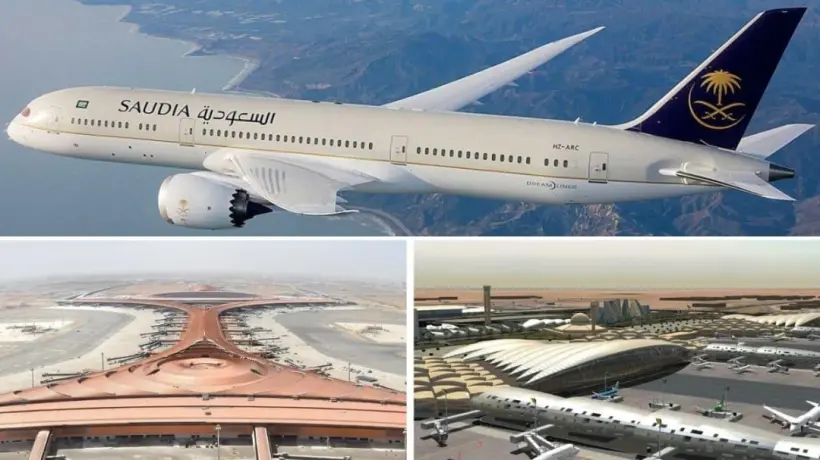
Khalid Al- Falih, Saudi Arabia's Minister of Investment stated that four Saudi airports will switch to private sector administration by 2025, therefore signifying a major turn in the nation's attempts to privatize and upgrade its infrastructure.
Speaking at the first Global Logistics Forum at the King Abdullah Financial Center in Riyadh, Al- Falih also underlined Saudi Arabia's goal of rising to be a significant worldwide green energy provider.
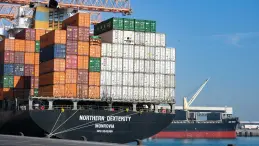
Al- Falih underlined the strategic relevance of regionalizing supply chains, pointing out Saudi Arabia's geographical location at the junction of East and West, as well as North and South, which helps it to be a major actor in world logistics. The Kingdom intends to set up logistical hubs in order to simplify supply chains, therefore strengthening its vital role as a hub for trade internationally. With an eye toward a united regional logistics network, Al- Falih also discussed the growth of closer marine communication ties between Saudi Arabia, Egypt, the United Arab Emirates, and Oman. He pointed out that this current infrastructure will be greatly enhanced by the Gulf Railway Grid, which supports regional connection.
Al- Falih claims that Saudi Arabia is also concentrated in moving its ports and logistical operations toward environmentally friendly solutions. He underlined that ports in Saudi Arabia will witness more demand as the world grows in need of greener means of transportation. The country's larger ambition for sustainable development depends critically on its drive towards green energy production; the Kingdom is positioned to become a major actor in renewable energy, especially in the manufacturing of clean energy resources.
Organized under the sponsorship of Custodian of the Two Holy Mosques King Salman and coordinated by the Ministry of Transport and Logistic Services, the Global Logistics Forum provides a vital forum for business leaders to influence the direction of the logistics sector. To address the potential and difficulties confronting the worldwide logistics sector, this three-day event brings together more than 120 speakers including ministers, logistics specialists, and international business leaders. Important subjects cover sustainability, world trade flexibility, and the application of creative technologies to transform transportation services.
The forum's major topic is the part current technology plays in revolutionizing logistics. Emphasizing innovation, the event sparks conversations on how modern technology may be used to improve efficiency, lower environmental impact, and build more sustainable logistics systems, Participants also have the chance to interact with legislators and decision-makers to investigate ways of cooperation and industry growth.
The event's larger goals of the forum are to promote worldwide collaboration and enhance alliances among the logistics sector, It gives members a forum to share ideas on enhancing efficiency, including logistical services into play, and adjusting to a fast changing global scene, Additionally expected to result from the event are the signing of various memoranda of understanding and agreements, so strengthening alliances between logistics companies and advancing worldwide sector integration.
Aiming at increasing cooperation in marine transportation research, one noteworthy agreement inked on the sidelines of the summit was a memorandum of understanding (MoU) between Egypt's Ministry of Transport and the Saudi Ministry of Transport, Minister of Transport and Logistics Eng, Saleh Al-Jasser signified Saudi Arabia; Egypt was represented by Lt. Gen. Kamel Al-Wazir, Deputy Prime Minister for Industrial Development and Minister of Transport. Egypt's involvement in the meeting with a high-level delegation of ministers, officials, and CEOs highlights the need of regional cooperation in the logistics industry.
The Global Logistics Forum is positioned as a pivotal gathering influencing the direction of world logistics, It acts as a spark for debates on sustainability, technical innovation, and international cooperation all of which are essential to meet the difficulties of contemporary logistics, Saudi Arabia's leadership in green energy generation and drive for privatization of its airports mirror the Kingdom's larger goal for economic diversification and world connectivity.


Comments
Log in to write a comment