


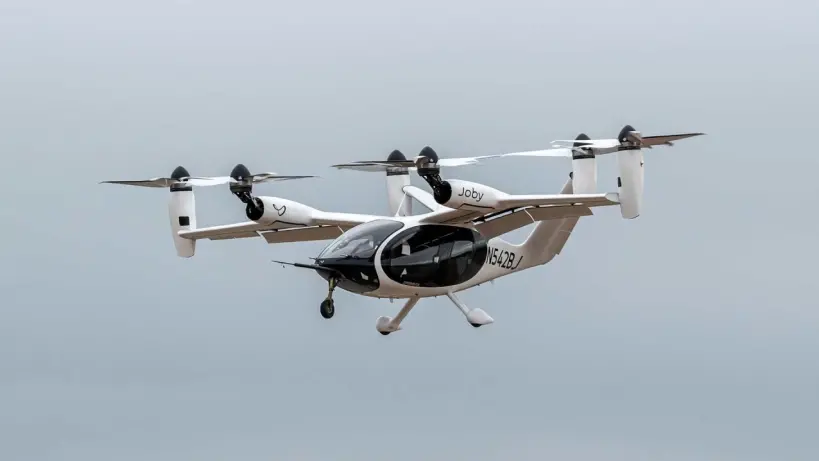
India is getting ready to launch flying taxis, and an industry analyst says charges for this futuristic kind of mobility might be similar to those of well-known ride-hailing companies like Uber.
During a panel discussion at the 42nd annual international conference run by the Institute of Chartered Accountants (ICAI) – Dubai Chapter, Kanika Tekriwal, the founder of JetSetGo, offered ideas on the evolution of flying taxis and personal air mobility.
Tekriwal underlined that making flying taxis a practical choice depends much on cost. She likened the possible democratization of flying cars to the past path of conventional cars. "Only the rich, roughly one percent of the world's population, could buy cars forty to fifty years ago. About forty percent of people on planet today own an automobile. We also see flying cars in that kind of future, she remarked. Tekriwal is convinced that personal air mobility will become a transforming factor in the transportation sector, influencing daily commutes in the next years.
Active creation of the required infrastructure to enable flying taxis in India is being done by jetSetGo, To make sure these aerial vehicles can fit into metropolitan settings, this covers developments in technology, safety rules, and operating logistics, Like ride-hailing apps have transformed ground transportation, Tekriwal noted that the main objective is to make these taxis affordable and easily available for a larger spectrum of the public.
Core of the flying taxi project, electric vertical take-off and landing (eVTOL) vehicles dominated much of the conversation, Tekriwal stated that for short-distance travel, the operational cost of using an eVTOL might be somewhat similar to Uber prices for comparable routes, This affordability is likely to be a main selling feature since it will enable more people to enjoy the ease of flying taxis free from significant financial load. For example, an eVTOL flight from home to the office is expected to cost roughly the same as an Uber fare, hence it's a sensible substitute for conventional transportation.
Apart from cost of use, Tekriwal also covered the expenses of owning flying vehicles. Owning an eVTOL vehicle would, she projected, cost between $200,000 and $300,000. For the typical customer, this still out of reach, but it marks a major step toward realizing personal air mobility. As manufacturing increases and technology develops, the expenses could drop, so allowing perhaps greater acceptance.
Tekriwal's ideas for personal air mobility and flying taxis transcend simple travel convenience. She underlined how its ability to lower traffic congestion, shorten travel times, and provide greener substitutes for ground transportation might reshape urban mobility, Using eVTOL technology which depends on electric propulsion fits with worldwide initiatives to lower carbon emissions and provide environmentally friendly transportation choices.
Though the date of the general acceptance of flying taxis in India is yet unknown, Tekriwal's comments highlight the notable advancement in this field, Together with the promise of reasonably priced flights, the construction of supporting infrastructure helps India to establish itself as a possible leader in the worldwide drive toward personal air mobility, Before flying taxis can be a regular appearance in Indian skies, though, issues including governmental permits, air traffic management, and public acceptance all remain major obstacles.
The possibility of flying taxis in India marks a dramatic advancement in transportation creativity. Like the car did in the past century, these futuristic vehicles have the possibility to change how people move with an eye toward cost and accessibility, Flying taxis could soon be a regular feature of India's transportation scene as JetSetGo and other partners strive toward fulfilling this vision provides a window into the future of mobility.





Comments
Log in to write a comment