


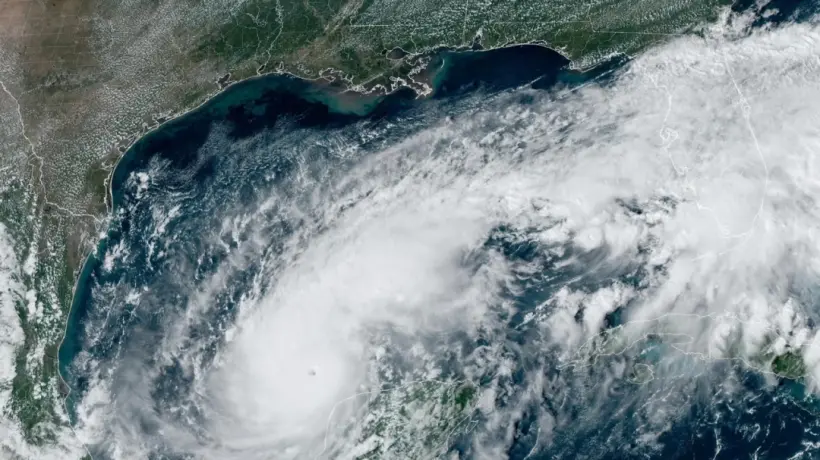
Once again upgraded to a Category 5, Hurricane Milton is hurling towards Florida's Gulf Coast and causing panic since it might inflict major damage.
Officials still expect the storm to make landfall as a Category 3 storm, however it is expected to weaken somewhat before it reaches land, hence causing possibly catastrophic effects. Wednesday night, which is Thursday morning UAE time, the hurricane is predicted to strike the Florida coast.
Milton has had amazing fast intensification. Monday saw it classified as a Category 1 hurricane, but within 24 hours it developed to Category 5. Milton might become the most devastating storm to strike the Tampa region in almost a century, according to warnings spurred by its quick escalation. It is among a unique collection of only forty Atlantic storms with Category 5 classification.
The National Hurricane Center (NHC) issued warnings regarding the storm as of 4 p.m. CDT on October 8th, noting the substantial areas of dangerous storm surge anticipated along portions of the west-central coast of the Florida Peninsula. Local officials have advised anyone under storm surge warnings to evacuate right away, stressing the need of treating the situation seriously.
Given the recent effect of Hurricane Helene, which already caused extensive damage in Florida, the situation is more worrisome. One of the most strong hurricanes in recent times, Hurricane Milton's wind velocity peaked at an amazing 180 miles per hour (288 kilometers per hour). For west-central Florida, the National Oceanic and Atmospheric Administration (NOAA) called it possibly one of the most catastrophic storms ever. Milton's wind speeds, for instance, were almost matching the all-time mark of 190 miles per hour established by Hurricane Allen in 1980.
President Joe Biden has proclaimed a state of emergency for Florida in reaction to the approaching peril. Following Hurricane Wilma in 2005 and Hurricane Felix in 2007, Milton is reportedly the third-fastest-growing storm on record in the Atlantic according to the Federal Emergency Management Agency (FEMA).
Tampa Bay's authorities have evacuated the area straight in the line of the storm's eye. Apart from the catastrophic winds and abundant rain, record-breaking storm surges are expected to impact most of the Florida peninsula. Milton was found early on Wednesday morning, some 360 miles southwest of Tampa, travelling northeast at 12 miles per hour. The storm's wind speeds stayed dangerously 160 mph even at that distance.
Thousands of people are leaving the Tampa Bay area, so there are continuous evacuations there. Florida Governor Ron DeSantis and director of disaster management Kevin Guthrie stressed the need of evacuation during a Monday press conference. Guthrie begged the locals to flee the impacted locations since drowning from storm surge is totally avoidable. Universities and colleges all throughout the state were shuttered until at least Thursday.
Complications in the evacuation procedure have especially arisen related to fuel shortages. About 25% of Florida's gas stations have reportedly ran out of, which has Florida Highway Patrol escorting fuel tankers to restocking stations along important evacuation routes.
Apart from the possibility of wind and flood damage, the Storm Prediction Center (SPC) has also cautioned Milton might cause many tornadoes in the area, maybe rated EF 2 or beyond. The fact that Hurricane Helene has produced over thirty tornadoes over the Southeast aggravates this worry.
Regarding historical background, the United States has gone through many disastrous hurricanes. With at least 8,000 deaths and destruction of buildings all over the city, the 1900 Galveston storm in Texas still ranks as the deadliest. More recently, Hurricane Katrina severely damaged New Orleans in 2005 and left over 1,300 dead; Hurricane Maria destroyed Puerto Rico in 2017 and claimed about 3,000 lives. These incidents underline the destructive power of storms such as Milton, therefore stressing the requirement of readiness and quick reaction.








Comments
Log in to write a comment