

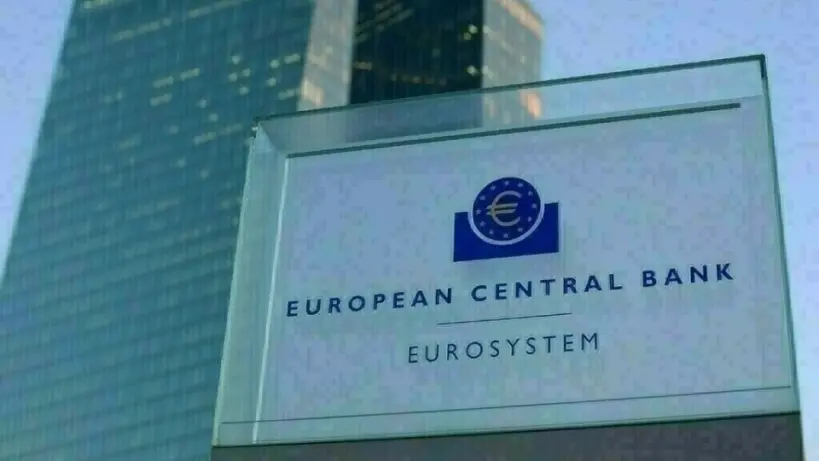
Thursday following the Governing Council's monetary policy meeting at the ECB headquarters in Frankfurt, European Central Bank (ECB) President Christine Lagarde spoke to the media.
With domestic political uncertainties and possible trade conflicts with the United States, the ECB announced its fourth interest rate drop this year, therefore indicating ongoing efforts to help the faltering eurozone economy.
Policymakers agreed generally that the central bank should lower its deposit rate by 25 basis points to 3%. The council chose a more cautious approach while some argued for a more forceful half-percentage-point drop to protect the eurozone economy from additional downturns, Lagarde underlined the difficulties the eurozone faces, pointing out "uncertainty in abundance" and voicing concern on the ongoing negative influences on economic development.
Given that inflation trends show a slow drop toward the 2% objective by early 2025, the ECB's recommendations suggested further near future relaxation of policies, Eliminating language referencing to maintaining rates "sufficiently restrictive" points to a change in policy orientation, During a press conference, Lagarde said, "The disinflation process is well on track," stressing however that downside risks to growth have became more evident.
Lagarde stayed wary about the future, though. She refrained from giving particular information on forthcoming policy changes in spite of the updated direction. Economists noted that although the elimination of the limiting phrase was notable, there was no obvious substitute. "It removed that key phrase, but didn't replace it with much," HSBC said.
Lagarde also underlined that domestic inflation is still shockingly high, underlining that the fight of the ECB against too rapid price rise is not yet finished. "More rate cuts lie ahead, but the ECB still seems to be on a path of normalization and does not appear to be in a hurry on that path," said Nordea, a financial services group in a report. Lagarde said that there is little space for more cuts since the four rate cuts taken thus far have already sufficiently covered most of the goals of the ECB.
Notwithstanding these official comments, the financial markets still expect more rate cuts. Investors are pricing in declines at every meeting through June; with a 30% chance that the drop in January may be as significant as 50 basis points. Furthermore under discussion is the possibility that by 2025 the deposit rate might drop to 1.75%.
Based on the new advice of the ECB, interest rates might approach the so-called neutral level, approximated to be between 2% and 2.5%. Neither does this level encourage nor slow down economic development. Lagarde underlined numerous negative aspects to development, including possible trade tensions with the United States under incoming President Donald Trump, while she was non-committal about further cuts.
The ECB's most recent economic estimates, which show a shallow, delayed rebound and slower-than-expected growth, mirrored these worries, Some legislators supporting a 50 basis point cut contended that, should punitive tariffs be implemented as Trump has advised, eurozone growth may fall below 1%, To exacerbate the weaknesses of the eurozone, Germany has an early election and France is dealing with political unrest, therefore adding more uncertainty.
The growth projections of the ECB have caused doubts among economists. Particularly the 2025 estimate, which predicts 1.1% growth, ING's Carsten Brzeski questioned the unduly optimistic estimates. Brzeski observed, "The bank has not taken into account Trump and France and is still banking on a return of the consumer,’s projections are too great to be true."








Comments
Log in to write a comment