


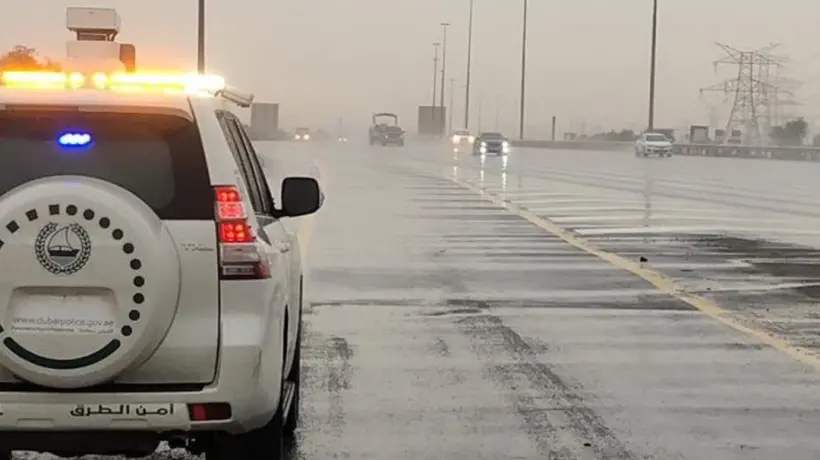
Light to moderate rainfall was recorded in parts of Dubai on Friday, prompting authorities to urge motorists to exercise increased caution while driving.
The National Centre of Meteorology (NCM) reports that early in the morning light showers occurred in Umm Suqeim, Jumeirah, Al Safa, and Al Jaddaf. The prediction shows the possibility of more rain over the United Arab Emirates while unstable weather conditions last, especially in northern, eastern, and coastal areas.
Dubai Police issued a public alert on X (previously Twitter) encouraging drivers to use safe driving techniques amid wet circumstances as portions of the nation were covered in clouds and rain was anticipated in some regions, By lowering visibility, generating slippery surfaces, and extending braking distances, rainfall can dramatically compromise road safety, Drivers have so been advised to be alert and to use preventative actions to stop mishaps.
Turning on their low-beam headlights when driving in rainy weather is one of the main advice for drivers, In low-visibility conditions especially, proper illumination guarantees that vehicles remain visible to other drivers. High beams should be avoided, though, since they reflect off damp surfaces and generate glare, therefore impairing sight even more.
Before traveling in the rain, another very important piece of advise is to check the windshield wipers of the car. Maintaining a clean view of the road depends on functional wipers, particularly in heavy showers that could fog eyesight. Should wipers be in poor condition, they could produce streaks on the windshield, therefore impairing drivers' view of pedestrians, other cars, or obstructions.
Dubai Police have also underlined the need of keeping a safe speed and keeping a suitable distance from other cars. Wet roads can cause tires to lose grip, therefore increasing the possibility of skids or hydroplaning. Slowing down lets drivers respond better to unplanned roadblocks or abrupt stops, Avoiding road margins can also assist stop vehicles from sliding into soggy areas-which might be deeper than they seem.
Drivers should also check their brakes after they pass water. Tapping wet brakes gently after passing through puddles helps dry them out and restore their responsiveness as they may not work as well as dry ones. This step guarantees that, in an emergency stop, brakes continue to be efficient.
Authorities have further advised drivers to stay away from low-lying roads, valleys, and flooded areas. Rainwater accumulated in these areas can be misleading; sometimes it seems shallow but is really deep enough to trap cars. Those who drive in such regions are especially at great risk from sudden flash floods.
Drivers are advised to use the outside air setting on their car's ventilation system in order to stop fog development inside of it. Changing to fresh air intake will help remove the fog more efficiently than utilizing the recirculation setting; condensation on the windshield can seriously impede vision.
Apart from these security precautions, Dubai Police have advised citizens to depend just on official sources for traffic reports and weather forecasts. Unverified material that goes around social media could not always be correct and might lead to unwarranted alarm or uncertainty. Verifying updates from the NCM and government authorities guarantees that individuals get the most accurate and current knowledge about road advice and weather conditions.
Authorities of the United Arab Emirates remain dedicated to guarantee public road safety even if the country still faces changing climate, Though rare in the area, rainfall might provide special driving difficulties requiring more care. Following these rules helps drivers reduce hazards and help to provide safer road conditions for all.






Comments
Log in to write a comment