


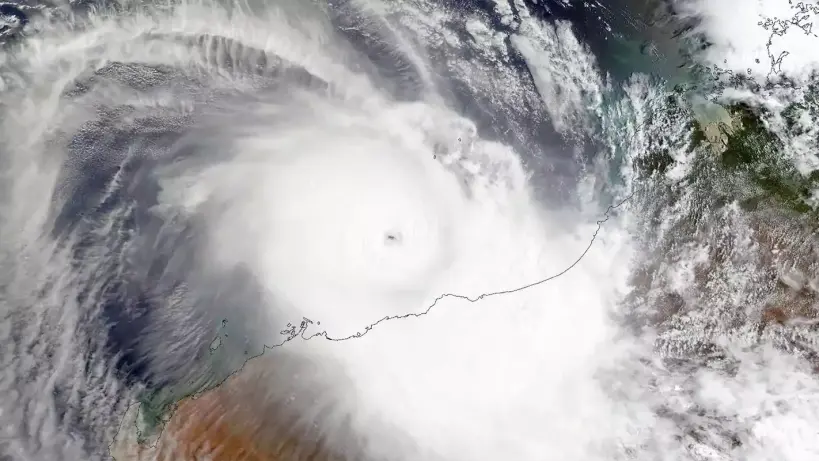
Severe tropical cyclone Narili devastated the central west coast of Western Australia, making landfall as a Category 3 storm and leaving widespread damage to infrastructure.
With wind speeds reaching 220 km/h, the cyclone forced a complete shutdown of regional transport networks, stranding thousands of travelers and causing significant delays in the state’s vital mining and logistics sectors.
The aviation industry was severely impacted, with Perth Airport having to close its emergency runway to clear debris.
Major airlines, including Qantas and Virgin Australia, canceled more than 40 regional flights.
International flights were also affected; a Singapore Airlines flight was diverted to Adelaide, highlighting the dangerous weather conditions over the Indian Ocean.
On the ground, the situation remains critical. Western Australia’s Major Roads Authority has officially closed a 400-kilometer stretch of the Northwest Coastal Road due to flash flooding and breached drainage channels.
Major shipping companies, such as Linfox and Toll, have issued force majeure notices, warning of delays of up to 48 hours in the transport of essential goods to the Pilbara region.
Meanwhile, the resources sector, particularly Rio Tinto, has reported significant disruptions.
Charter flights for workers on a first-in, first-out (FIFO) basis have been postponed, and temporary accommodation in Dampier has reached full capacity.
Engineers are currently monitoring the stability of railway dikes to ensure that iron ore exports to Geraldton Port can resume as soon as conditions improve.
With the Bureau of Meteorology forecasting up to 200 mm of rainfall, transport managers are urging commuters to activate detour plans via Adelaide or Darwin.
For those who need urgent travel documents or visa updates due to these unexpected transfers, experts recommend using real-time alert platforms to stay informed.








Comments
Log in to write a comment