


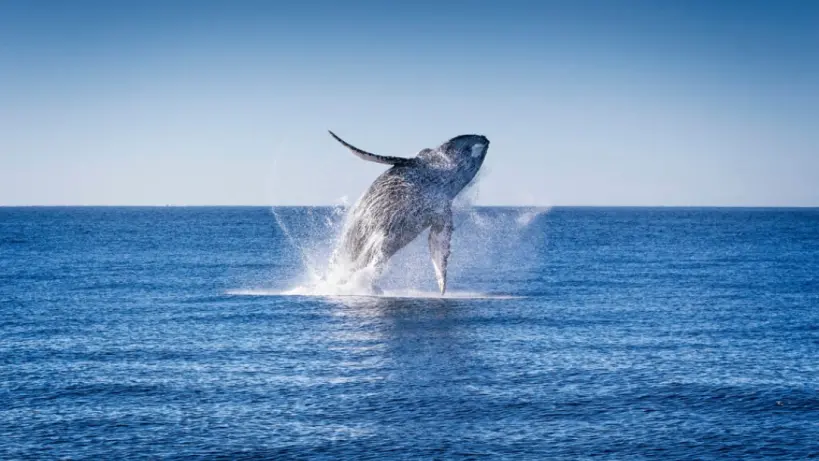
For centuries, the largest filter-feeding whales, including humpbacks, fin whales, and blue whales, have embarked on some of the earth's most extensive migrations.
These majestic creatures journey annually between their tropical breeding areas and the nutrient-rich poles.
"Nature has finely tuned these journeys, guided by memory and environmental cues that tell whales when to move and where to go," remarked Trisha Atwood, an ecologist at Utah State University's Quinney College of Agriculture and Natural Resources.
However, she highlighted how climate change is disrupting these signals, causing marine mammals to stray from their courses.
Whales aren't alone in this predicament.
This year, Atwood collaborated with over 70 scientists during a United Nations Convention workshop focused on the Conservation of Migratory Species of Wild Animals.
This gathering discussed the global effects of climate change on migratory species.
The organization is responsible for monitoring and protecting more than a thousand species traversing borders in search of sustenance, partners, and nurturing environments for their young.
Alarmingly, over 20% of these species face extinction threats.
This event marked the first instance where such discussions were held by the convention, culminating in a report published this month that revealed disturbing findings.
"Almost no migratory species is untouched by climate change," stated Atwood via email.
The impacts span from whales and dolphins to Arctic shorebirds and elephants.
Rising temperatures, extreme weather events, and shifting ecosystems are altering migratory routes and reshaping vital habitats worldwide.
The report indicates that Asian elephants are being driven to higher elevations near human settlements as they seek food and water amidst worsening drought conditions-escalating human-elephant conflicts. Meanwhile, shorebirds arriving at Arctic breeding grounds find themselves out of sync with essential insect blooms needed for their chicks' survival.
Additionally noted in the report is how seagrass meadows-a crucial source for migrating sea turtles and dugongs-are vanishing due to warmer waters, cyclones, and rising sea levels.
Alarmingly close to 30% of known seagrass beds globally have already been lost.
This threatens not only dependent animals but also humans since these ecosystems store about 20% of oceanic carbon while supporting fisheries along coastlines.








Comments
Log in to write a comment