


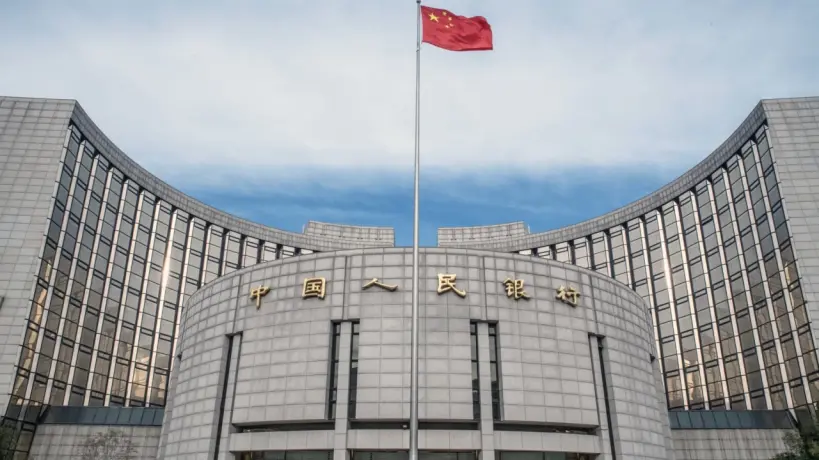
On Monday, the PBOC conducted remarkable monetary operations by executing reverse repurchase agreements, commonly referred to as reverse repos, and injecting adequate liquidity in the financial system. The central bank had executed seven-day reverse repos worth 160.1 billion yuan, which is approximately 22.7 billion U.S. dollars, at a 1.7 percent rate. It also conducted 14-day reverse repos worth 74.5 billion yuan with a marginally higher interest rate of 1.85 percent.
These moves by the PBOC are part of its broader efforts to keep reasonable and ample liquidity in China's financial system at a period when the current quarter is nearing its end. In a statement, the central bank said the move is imperative to "maintain the stability of the banking system and ensure the normal functioning of the economy." According to the official news agency Xinhua, this liquidity injection was meant to "avoid potential cash shortages in the financial markets or a disruption of commercial banks' lending capabilities.".
Reverse repos are a form of monetary operation wherein the central bank purchases securities from commercial banks through some sort of bidding but with an agreement to sell those securities back in due time. This mechanism allows the central bank to inject short-term liquidity into the banking system while ensuring it will be able to withdraw that very liquidity at due time, keeping the overall money supply under control. In this regard, the PBOC, through the usage of reverse repos, is trying to balance a fine line between offering enough liquidity in the market without oversupplying money, which may result in inflationary pressures.
The timing of the PBOC's action also coincides with the end of the quarter, when banks normally show more demand for liquidity. In China, like elsewhere in the world, commercial banks need more cash at the end of financial reporting periods, partly because of regulatory requirements and because accounts must be settled. This strains the banks' reserves and, if not well managed, may signal tighter lending conditions and higher borrowing costs. Such operations from the PBOC are preemptive measures to avoid such problems, ensuring that banks do not face liquidity shortages in their efforts to meet contractual obligations.

Performing both seven-day and 14-day reverse repos, the PBOC meets immediate liquidity needs but also offers some stability over a slightly longer period of time. While the seven-day reverse repos at a low interest rate of 1.7 percent aims at short-term liquidity, the 14-day reverse repos at 1.85 percent provides somewhat more extended support to banks in managing their balance sheets. This not only addresses smoothing out the cyclical liquidity fluctuations during a month, but it also places the banks in good stead to meet the short- and medium-term cash flow demands.
This cautious monetary policy stance of the PBOC reflects in its management of liquidity. True, China's central bank has taken steps to support economic growth, especially after global economic uncertainties arose, yet it was also very watchful about the risks of excessive liquidity. Hence, by prudent calibration of such tools like reverse repos, the PBOC would be able to support banks and the broader economy without overheating the credit markets and feeding asset bubbles.
These liquidity operations are important in the wider perspective of China's economy as the country balances economic growth against financial stability. Challenges for China include slowing growth, pressure on the property sector, and external trade tensions that could make its financial system vulnerable. The PBOC will be ensuring that banks are sufficiently liquid, hence mitigating these risks and maintaining stability in the financial system.
The recent tapping of reverse repos by the PBOC, well over 234 billion yuan in total, reinforces its commitment to stability in China's financial markets. These operations provide essential liquidity to commercial banks when cash demands are raised. In this vein, the central bank conducts policy with great caution, paying extra attention to the management of short-term liquidity with a view to maintaining stability in the economic climate and encouraging further lending without causing any end-quarter financial disruptions.








Comments
Log in to write a comment