


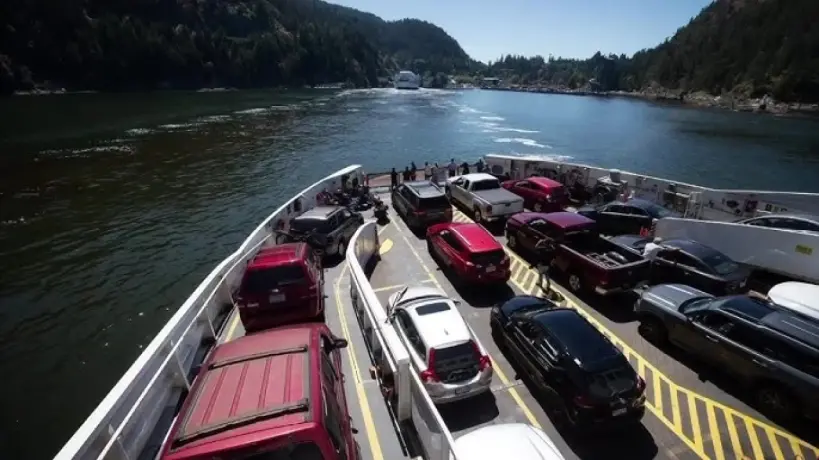
B.C. Ferries' enforcement of a policy barring damaged electric vehicles raises concerns for islanders relying on ferry access.
A newly enforced policy by B.C. Ferries is causing concern among island residents, as damaged electric vehicles (EVs) are now prohibited from boarding their ferries. This decision has left many feeling frustrated and isolated, particularly those living on islands.
British Columbia stands at the forefront of electric vehicle adoption, with over 20% of new light-duty passenger vehicles sold in 2023 being EVs. However, as of late June, B.C. Ferries has reinforced a policy-rooted in Transport Canada regulations from 2014-that disallows vehicles with compromised or faulty batteries from ferry transport.
"Although this approach isn't new, there’s been an increase in incidents involving damaged EVs attempting to board our ferries," explained B.C. Ferries in a statement. The company emphasized that these rules prioritize safety.
Yet for communities reliant on ferry services to and from more than two dozen islands-and given the widespread ownership of EVs where repair options are limited-the policy has sparked feelings of entrapment among residents.
Johnathan Vipond, who operates Salt Spring Island Towing, reports that he routinely transports disabled hybrid or electric cars off the island multiple times weekly. Given the high concentration of such vehicles on Salt Spring Island's population of fewer than 12,000 people, the challenge is significant.
According to Vipond, customers are displeased with the recent enforcement changes because alternative means like barges represent costly solutions. Despite some mechanics having EV expertise locally, their repair capabilities remain restricted.
"I support B.C. Ferries’ safety considerations," remarked Vipond, "but most of these vehicles are already present across Gulf Islands; it feels somewhat overdue." Residents have observed that despite previous transport occurrences without issue, enforcement has now tightened.
The revised policy specifies that EVs exhibiting major issues-including exposed batteries or wiring problems-cannot travel via ferries. Additionally, non-operational EVs requiring towing face restrictions as well.
For minor damage cases such as cosmetic flaws, drivers must consult with terminal personnel who will coordinate with ferry captains to determine if loading is permissible upon visual assessment.
B.C.'s commitment to environmental sustainability was underlined by passing the Zero-Emission Vehicles Act (ZEV Act) in 2019 aimed at increasing zero-emission vehicle sales towards achieving provincial greenhouse gas reduction goals. Consequently, British Columbia leads other provinces and territories in per capita EV sales within recent years.





Comments
Log in to write a comment