

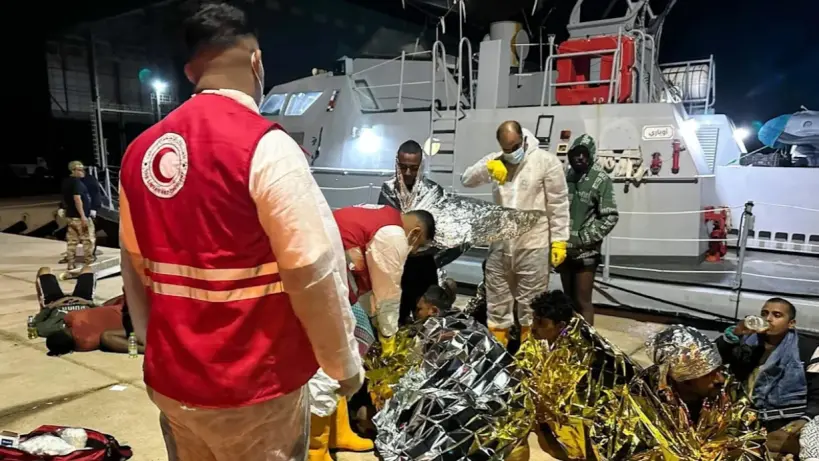
At least four people have lost their lives after two boats carrying close to 100 migrants sank off the coast of Libya on Saturday, according to rescue officials.
The Libyan Red Crescent confirmed that the deceased individuals were all among a group of 26 Bangladeshi nationals traveling in one of the vessels. However, the organization has not provided information on any possible casualties from a second boat, which was carrying approximately 70 passengers-mostly Sudanese citizens-when it also capsized.
Both boats were attempting to traverse the central Mediterranean route linking North Africa and Italy. The United Nations International Organization for Migration (IOM) classifies this passage as the "deadliest known migration route in the world."
The journeys began in Al Khums, a port city situated in northwestern Libya, according to statements by relevant organizations. The Libyan Red Crescent released images depicting its teams providing aid to survivors and tending to black body bags at the scene.
Overcrowded and unseaworthy vessels continue to claim hundreds of lives each year as individuals seek to reach southern Europe via dangerous crossings. Data from IOM indicates that more than 1,500 people have either died or gone missing in the Mediterranean during 2025 so far, with roughly a third of these incidents occurring off Libya’s coastline.
Libya remains the main departure point for migrants seeking entry into Europe via this perilous route. Figures from Frontex-the European Union’s border security agency-show that nearly 59,000 people have reached Europe by way of the central Mediterranean crossing since the beginning of this year.
Earlier this week, reports emerged about dozens of migrants who went missing and are presumed dead after their small vessel capsized following departure from Libya. Seven survivors-from Sudan, Somalia, Cameroon, and Nigeria-were rescued after surviving nearly a week stranded at sea. Akhbrna News continues to monitor developments surrounding migrant journeys across the Mediterranean and ongoing rescue efforts along these hazardous routes.






Comments
Log in to write a comment