

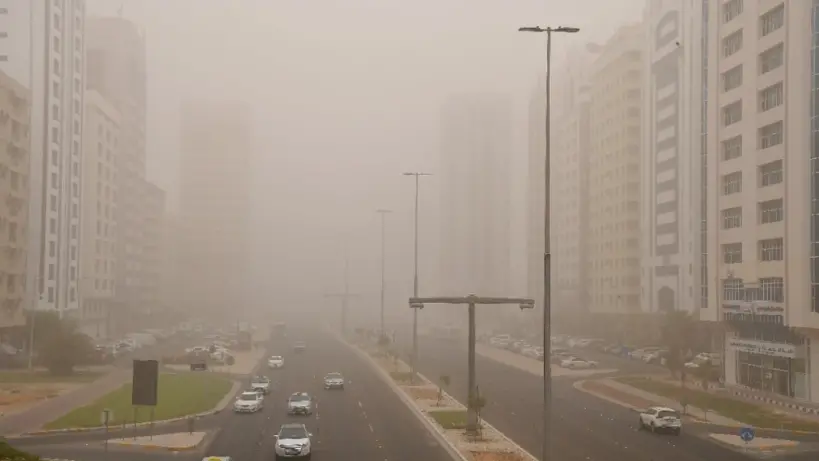
In a statement Ibrahim Al-Jarwan, the chairman of the board of directors of the Emirates Astronomy Society and a member of the Arab Union for Space and Astronomy Sciences, stated that it is typical for the Gulf nations, including the United Arab Emirates, to be impacted during this time of year by the emergence of alternating dust storms, known as "Tuz." These storms start in April and may continue until the end of July, but they may take the form of intermittent waves.
According to Al-Jarwan, dust masses are not just found in the Arabian Peninsula or Arab nations; they are active and have an impact on many parts of the world. For example, massive dust masses known as "Sahara dust" are occasionally released from the Sahara Desert and travel towards Europe or the Americas, affecting countries like China, India, Pakistan, and Iran.
The effect of the storm on the respiratory system
He emphasized that it is crucial to adhere to the air quality index, which gauges the concentration of vital elements in the air as well as the concentration or density of suspended particles, which trigger allergies and have an adverse effect on the respiratory system and eyes that may result in eyelash, in light of the dust and sand storms that are prevalent during this time of year.
According to the Air Quality Index ranking, he noted, outside activities must be considered for schoolchildren, outdoor field workers, and even football games and their impact on players' or the public's health.
Tips for dealing with sandstorms
In a related context, the National Emergency, Crisis and Disaster Management Authority recommended a set of guidelines for handling sandstorms. These guidelines include avoiding glass windows and doors, removing children and people with respiratory conditions, asthma, and allergies from the house as much as possible, and following instructions and guidelines from the appropriate security authorities if you hear an evacuation order.







Comments
Log in to write a comment