


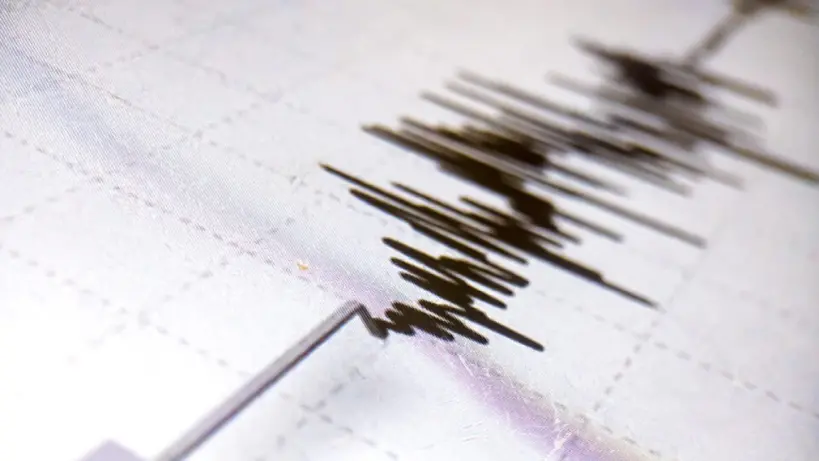
Early on Monday, a 4.8 magnitude earthquake struck the Greek island of Crete south of Athens. Fortunately, after the tremor, no instantaneous reports of any injuries or major damage have surfaced.
The Geodynamic Institute of the Greek National Observatory claims that the epicenter of the earthquake was probably 25 kilometers southeast of Lasithi, a town on the easternmost tip of Crete. The earthquake happened 8.1 kilometers below the ground surface of Earth.
Largest of the Greek islands, Crete is prone to seismic activity because of its proximity to the junction of the African and Eurasian tectonic plates. Though most of them are tiny and inflict little harm, earthquakes are somewhat regular in this area and the nation suffers hundreds of shocks every year. Although significant in scale, this specific earthquake seems to have been shallow and concentrated in a less populated area, so reducing the possible damage or mortality.
Local officials and experts will probably keep observing the matter even if there are no first accounts of damage. Often following major earthquakes, aftershocks could continue strike and authorities could have to evaluate infrastructure for any damage. But at the time the earthquake struck, there were no recorded significant disturbances in Lasithi or the neighboring regions.
This latest earthquake reminds us of the continuous seismic activity in the Mediterranean area, especially surrounding Greece, one of the most seismically active nations in Europe. Crete itself has a history of earthquakes, some of which have past caused significant damage. Still, the local population is used to such events, and Greece has created strict building codes to help to reduce the dangers from earthquakes.
Although the people living on the island and visitors most certainly felt the shaking, its influence was limited by its shallow depth and offshore position. Under such circumstances, seismologists and local authorities monitor aftershocks closely and make sure emergency services are ready to react should the situation get more severe. Although most of the time these earthquakes go without any major repercussions, preparedness is still very important, particularly in an area as seismically active as the Aegean Sea.
Although no damage was recorded, smaller buildings-especially older ones-often experience cracks or other minor problems during moderate quakes like this. Local authorities could have to check sensitive buildings to make sure they stay safe for usage. Public facilities including hospitals, schools, and transit centers are also routinely assessed following such disasters to avoid possible hazards from undetectable damage.
Usually felt over a large radius, earthquakes of this kind is predicted to have limited overall impacts even though the tremor would have been clearly felt over much of Crete. Safety procedures in the case of an earthquake are usually known to Crete residents as well as those of other Greek areas prone to earthquakes. Regular drills carried out by national public institutions and schools help to equip people for possible earthquake events, therefore lessening panic and guaranteeing a quick response when necessary.
Greece has long suffered strong earthquakes, some of which have had disastrous consequences especially in highly populated areas or locations with less strict building regulations. But because to better building codes and the application of earthquake-resistant architecture in contemporary constructions, the damage caused by moderate quakes in recent years has been much lessened.
The 4.8 magnitude earthquake that hit Crete reminds us of the constant seismic activity in the area; nonetheless, the lack of major damage or injuries emphasizes the fortitude of the local infrastructure and population. Although authorities will keep observing the matter, it seems that although alarming, this episode has not resulted in any major repercussions. Minimizing the hazards connected with living in a seismically active zone depends much on the people's and the infrastructure's preparation in Greece, especially in areas like Crete.







Comments
Log in to write a comment