


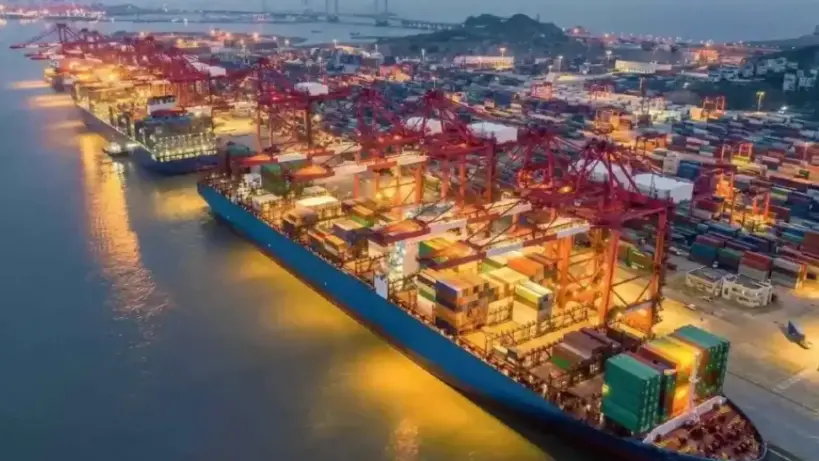
In a fresh twist to the ongoing trade tensions between the United States and China, new fees targeting American vessels entering Chinese ports were implemented on Tuesday.
This move, described by China as necessary to protect its shipping sector from "discriminatory" actions, affects vessels that are US-owned, operated, constructed, or registered under an American flag, yet spares those built in China.
This decision follows Washington's announcement of impending charges on Chinese ships docking at US ports starting October 14. In response to these developments, Beijing also declared new regulations aimed at restricting rare earth exports and floated potential further economic reprisals.
President Donald Trump has reacted with threats of imposing an additional 100% tariff on Chinese imports if the situation deteriorates further. Coinciding with these exchanges, the United States activated fresh tariffs on several imported goods including timber and furniture, much of which is sourced from China.
Despite these heightened tensions, Treasury Secretary Scott Bessent reassured that President Trump and China's leader Xi Jinping still plan to convene later this month in South Korea to seek pathways for alleviating trade frictions between the two leading global economies.
Bessent expressed optimism: "The 100% tariff doesn’t have to happen... Communication lines are open; we’ll observe how things develop." Meanwhile, a spokesperson from China’s commerce ministry reiterated their stance: "If a fight ensues, we'll respond vigorously; but dialogue doors remain ajar." They emphasized that negotiation can't proceed effectively under duress or while confronting new restrictive actions.
The imposition of these duties by the United States was criticized by Chinese state media as breaching a maritime transport pact binding both nations. Consequently, vessels linked to US interests now face charges amounting to 400 yuan ($56) per net tonne when berthing at Chinese harbors-a figure slated to rise annually until reaching 1,120 yuan per tonne by April 2028.
This fee structure could escalate costs significantly for cargo carriers transporting bulk commodities such as coal and raw materials-potentially accruing up to $3 million in port expenses starting today according to freight expert Claire Chong. Projections suggest this could surge beyond $10 million for massive dry-bulk ships by 2028 if current trends persist.
Chong highlights that while overall industry expenses will grow noticeably due to these fees-the exclusion granted for vessels constructed in China (representing nearly half of all dry bulk carriers globally) might temper some adverse financial impacts.
These recent measures unfold despite earlier tariff truce agreements reached this year where both countries had scaled back looming triple-digit tariffs threatening bilateral trade flows.
Yet ongoing disputes leave lingering levies-American products facing extra charges above previous levels during entry into China's market while Chinese exports endure elevated tariffs stateside.-Akhbrna News





Comments
Log in to write a comment