


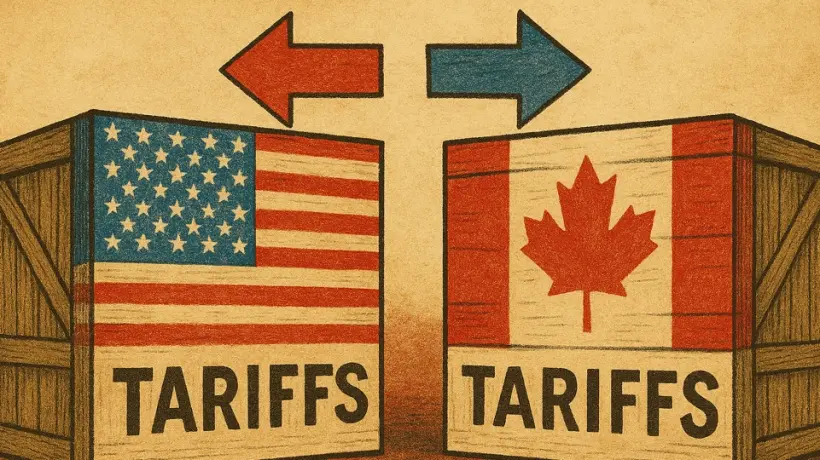
President Donald Trump announced plans to increase tariffs on Canadian imports by 10%, responding to an advertisement from Ontario opposing such tariffs, which has stirred tensions within one of the world's largest trade partnerships.
The statement, posted on Truth Social, comes after several days of disputes regarding the ad. The advertisement referenced former President Ronald Reagan’s advocacy for free trade, prompting a backlash from Trump.
"Due to their serious misrepresentation of facts and hostile action, I am increasing the tariff on Canada by 10% over and above what they are currently paying," Trump declared on Saturday.
Currently, Canada faces a base U.S. tariff rate of 35%. However, due to exemptions under the US-Mexico-Canada Agreement (USMCA), this rate does not apply to most Canadian goods. Nonetheless, steel and aluminum products do not qualify for these waivers, and Canadian vehicles only partially bypass Trump's existing 25% tariffs on foreign automobiles.
Prime Minister Mark Carney has been in prolonged negotiations with the U.S. aiming to reduce these levies. Ontario Premier Doug Ford indicated that following discussions with Carney, the province would suspend its U.S. advertising campaign on Monday in hopes that talks may continue.
This disagreement revives uncertainty between two closely linked trading partners who exchanged $900 billion in goods and services last year and share intertwined supply chains across key industries.
On Thursday, Trump stated he would cease all negotiations with Canada concerning the ad campaign that included parts of a 1987 speech by Reagan defending free trade while criticizing tariffs as obsolete.
The announcement was made as Trump departed for an Asian tour involving participation at both the ASEAN summit in Malaysia and the APEC summit in South Korea.
When asked if he planned to meet with Carney during his trip, President Trump replied before departure that "I don’t have any intention of it."
After initial halting of discussions by Trump, Carney had expressed Ottawa's willingness to resume negotiations "when Americans are ready," highlighting progress made previously regarding issues related to steel, aluminum, and energy sectors.
The Canadian economy has suffered significantly under Trump's tariffs given that about three-quarters of its exports were destined for the United States last year. Ontario's industries-particularly steel and automotive-have been directly impacted by these import taxes imposed by Trump’s administration.







Comments
Log in to write a comment