


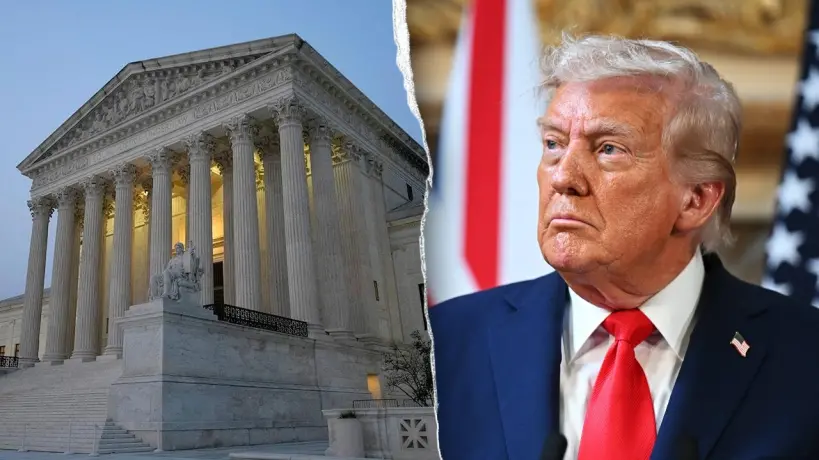
The U.S. Supreme Court is set to deliberate on President Trump's contentious tariff policies amid global attention. The outcome could redefine presidential powers over trade while impacting countless businesses both domestically and internationally.
A pivotal moment in Donald Trump’s trade strategy is fast approaching, as the U.S. Supreme Court prepares to hear arguments challenging the legality of tariffs imposed by his administration. This legal clash pits the government against small businesses and states, who argue these tariffs violate international trade laws and should be abolished.
Should the court decide against Trump's policies, it could potentially dismantle a central component of his economic agenda - particularly the wide-reaching global tariffs announced earlier this year. Additionally, billions of dollars collected from these import taxes may need to be refunded.
The justices' verdict, following extensive deliberations expected to last several months, could redefine presidential authority over trade negotiations. Trump has framed this conflict as critical to national security, cautioning that an unfavorable decision would impair his ability to negotiate effectively on behalf of the country.
The stakes are equally high for businesses domestically and internationally affected by these tariffs. For instance, Learning Resources is projected to incur $14 million in tariff costs this year alone-an amount that far exceeds previous expenses.
Many businesses remain cautious about relying on a favorable ruling. Bill Harris from Georgia-based Cooperative Coffees expressed hope but acknowledged that firms are bracing for continued enforcement of these duties.
The Supreme Court must address broader questions regarding executive power and its boundaries. Analysts suggest a ruling in favor of Trump would enhance presidential capabilities across different administrations.
The case focuses specifically on tariffs implemented under the 1977 International Emergency Economic Powers Act (IEEPA), which allows rapid action via declared emergencies. Trump applied this act first against goods from China, Mexico, and Canada due to alleged drug trafficking threats. He later expanded its use citing trade deficits with numerous countries as emergency issues.
Critics claim only Congress holds constitutional authority to impose taxes like tariffs and dispute whether such deficits constitute genuine emergencies warranting unilateral executive action. Bipartisan voices in Congress have echoed concerns about executive overreach in tariff applications without legislative consent.
Legal experts anticipate various outcomes from this case given recent trends where similar significant policies were dismissed as executive overreach while others aligned closely with presidential discretion received support





Comments
Log in to write a comment