


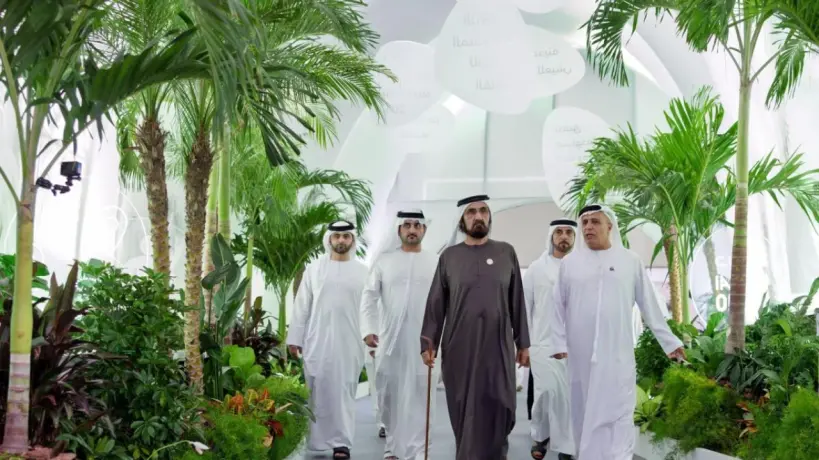
Dubai is about start an enormous project meant to make the city more environmentally sustainable and pedestrian friendly. Recently revealed by the Roads and Transport Authority (RTA), the Dubai Walk master plan calls for the building of 6,500 kilometers of contemporary pathways dispersed over 160 districts of the emirate by 2040.
While giving inhabitants and visitors beautiful paths to see the city, this large network will greatly improve pedestrian access, encourage soft mobility, and help to lower carbon emissions.
With proposals for nearly 900 km of extra walkways beyond 2040, the master plan consists in two main components: the building of 3,300 km of new walkways and the repair of 2,300 km of existing paths, The RTA has proposed the building of 110 pedestrian bridges and underpasses to improve connectivity even more; these will be essential to guarantee effective and safe mobility across congested roadways and intersections.
By 2040, the overall aim is to raise the present 13% to 25% proportion of pedestrian and soft mobility transport, Walking, cycling, and using scooters or skates-any kind of transportation that generates no carbon emissions-are examples of soft mobility-that is, environmentally benign means of travel.
Three different uses for the new walkways community walks, city connectivity paths, and scenic-leisure walkways will be evident Every kind of walkway will be made to satisfy various purposes and help to further the general objective of enhancing Dubai's pedestrian system.
Scenic-leisure walkways will give both locals and guests easy paths to appreciate Dubai's varied terrain. The RTA wants to create 64 kilometers of urban paths, 124 kilometers of green walkways, 112 kilometers of shoreline paths, and 150 kilometers of country paths, These paths will highlight the natural beauty of the emirate and provide areas for outdoor pursuits, leisure, and breathtaking vistas.
Pathways of city connection will center on enhancing first- and last-mile access in important locations including Al Rigga, Business Bay, Al Badaa, and Dubai World Trade Center, These pathways will improve access between public transit choices and important locations, so facilitating people's ability to alternate between several forms of mobility and so lessen dependency on private cars.
Direct connections between local people and community facilities made possible by the community pathways will help to create an inclusive and easily accessible metropolitan environment, These paths will connect Al Barsha 2, Al Khawaneej 2, and Al Mizhar 1 to shops, hospitals, and schools-essential services, The scheme seeks to cover 50 locations over time, therefore enhancing the quality of life in every Dubai community.
A main component of the Dubai Walk master plan is sustainability. With elements like misting systems to keep people cool during the hotter months, the walkways will be made to include vegetation and shady sections, Interactive digital panels, art exhibits, sports equipment, rest rooms, and business spaces will be combined to provide people a lively and interesting surroundings.
These characteristics will enhance not just environmental sustainability but also make walking more fun. Several important streets, including Jumeirah, Baniyas, Al Khaleej, and Al Muraqqabat, will be rebuilt as part of the project to be more pedestrian-friendly with boulevards surrounded in flora or greenery.
The Dubai Walk master plan also fits the city's larger ambition of becoming a "20-minute city," in which 80% of the population will have access to basic amenities within a 20-minute travel. According to Dr. Monica Menendez of NYU Abu Dhabi, this idea seeks to make services more accessible so less reliance on long-distance travel and traffic congestion is needed.
Adding more sidewalks and increasing public transportation choices will assist Dubai's traffic congestion be lessened while also encouraging better and more sustainable means of movement. Micro-mobility infrastructure including bike lanes and scooter routes will help inspire neighbors to use environmentally friendly means of mobility.
The Dubai Walk master plan also seeks to bring important public areas all throughout the city alive, At sites including the Etihad Museum, 2nd of December Street, Al Mamzar, and Mushrif, hubs and plazas will be developed. Super blocks in places including Al Fahidi, Al Quoz, Al Karama, and Abu Hail will give neighbors well-connected, pedestrian-friendly communities.
The design rules for the project will incorporate the building of continuous and shaded walkways, directional signage, public art installations, sustainable lighting, and more green and leisure areas in order to improve public involvement even more, These initiatives seek to strengthen community and enhance the whole urban experience for Dubai's citizens and guests.
The forward-looking Dubai Walk master plan aims to solve the growing demand for sustainable urban mobility while improving the quality of life for every resident of the city or visitor. Emphasizing environmentally sustainable design and pedestrian-friendly infrastructure, the project reflects Dubai's will to build a better, more linked, and livable city for next generations.




Comments
Log in to write a comment