


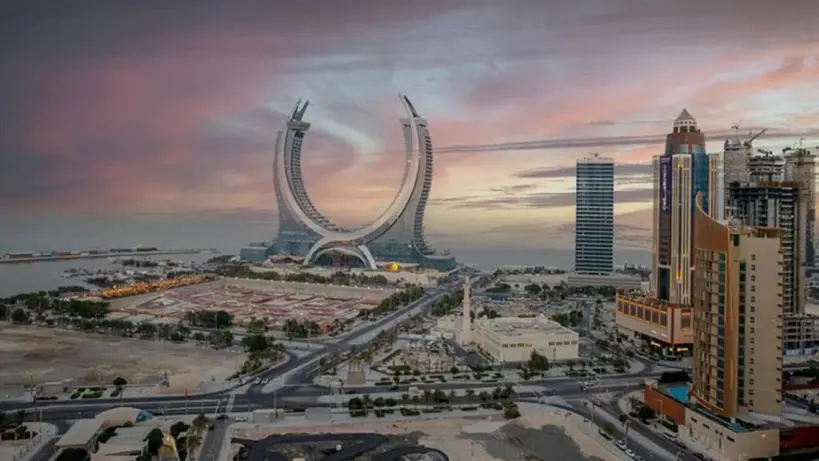
Officially endorsing its budget for the fiscal year 2025, Qatar has predicted revenues of $54 billion and expenses of $57.7 billion, Published in the Official Gazette, Amir Sheikh Tamim bin Hamad Al-Thani passed the budget under Law No. (17) of 2024, which will take effect on January 1, 2025.
Ali bin Ahmed Al Kuwari, the minister of finance, said that, compared to the fiscal year 2024, the total expected income for 2025 is projected at QR197 billion ($54 billion), a 2.5% drop. Using an average oil price of $60 per barrel, the Minister underlined Qatar's sensible estimate of oil and gas income, Targeting financial flexibility and guaranteeing spending consistency across changing global energy markets, this cautious approach aims to
Reflecting a 3.1% drop from the QR159 billion ($43.6 billion) recorded in 2024, the expected oil and gas revenues for 2025 are tagged at QR154 billion ($42.2 billion), Non-oil income, meantime, is constant with the year before at QR43 billion ($11.8 billion), proving stability in the diversification of income sources.
Regarding expenditure, overall expenditures for 2025 is expected to be QR210.2 billion ($57.7 billion), a 4.6% rise over 2024, Estimated at QR13.2 billion ($3.6 billion), the budget deficit for the year will be funded using local and international loan instruments in concert.
With QR41.4 billion ($11.4 billion) set aside for the health and education sectors, a sizable portion of the budget has gone toward these areas, so confirming Qatar's will to make investments in human resources and raise the quality of public services. The allocation for health and education underscore the national focus on social and long-term growth.
Strategic industries vital to Qatar's economic diversification and environmental objectives also get top priority in the 2025 budget, Resources have gone to commerce and industry, research and innovation, travel, digital transformation, and information technology, These allocations complement Qatar's more general plan to lower reliance on gas and coal and promote growth driven by innovation.
Government employee salaries and earnings are scheduled to rise by 5.5% in 2025, equating to QR67.5 billion ($18.5 billion), Secondary capital expenditures will increase by 7.7%; current expenditures are predicted to climb by 6.3%, With an eye toward strategic and developmental projects, major capital expenditure allocations will witness a meager 1.4% rise to assist continuous national development goals and infrastructure.
The budget emphasizes Qatar's will to strike a balance between economic growth and financial sustainability. Qatar wants to negotiate global economic uncertainty by keeping a wary attitude to income estimate and concentrating on key investments, so promoting development in areas of top priority.
Furthermore underlined by the Ministry of Finance the need of properly controlling capital and current expenses Qatar's aim to create a strong and diverse economy that satisfies its rising population's requirements drives the increase in allocations for human capital and developmental initiatives.
On a Sunday press conference, Minister Ali bin Ahmed Al Kuwari is supposed to offer further analysis on the 2025 fiscal year budget, This thorough briefing will provide a whole picture of Qatar's financial priorities for the next year by clarifying particular strategies and projects inside the budget framework.
Qatar's 2025 budget shows a balanced strategy for preserving budgetary discipline while supporting economic development, Emphasizing healthcare, education, and vital sectors as well as others, the budget seeks to forward Qatar's ambition for a varied and environmentally friendly economy. The small deficit and sensible income projections point to a dedication to stability, therefore guaranteeing the nation's preparedness to meet opportunities and future difficulties.







Comments
Log in to write a comment