


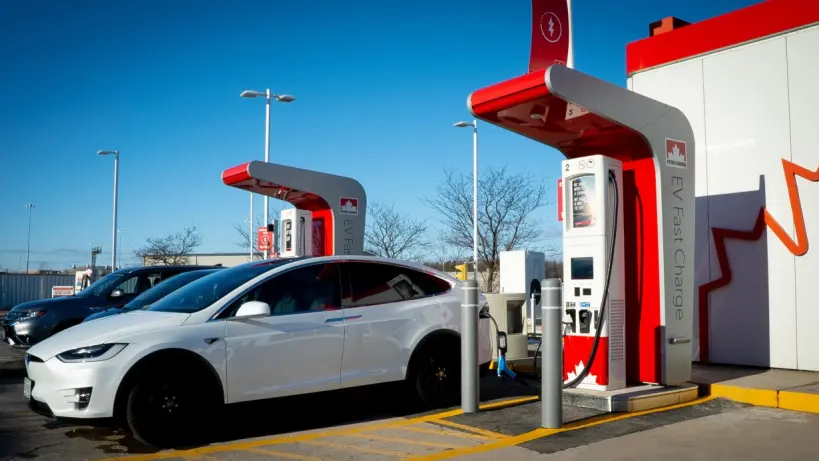
Canada sees an increase in electric vehicle charging stations, yet network gaps remain, particularly affecting multi-unit residential building residents relying on street parking.
Despite notable strides in increasing the number of electric vehicle (EV) charging stations along major routes, Canada continues to face challenges in establishing a comprehensive EV charging network. Researchers emphasize that while more chargers facilitate longer trips for EV owners, significant infrastructure gaps still persist.
Currently, there are just over 35,000 charging stations nationwide, a figure considerably short of the 100,520 required to fulfill Canada's electric vehicle policy objectives. According to a report by Dunsky Energy and Climate from Montreal, this shortfall hampers progress.
The consultancy's analysis from 2021 suggested a need for 52,000 chargers by this year. However, they revised this target in February 2024 to reflect the additional requirement for commercial fleet support and secondary road access.
The latest data from Natural Resources Canada highlights that a substantial majority - 88 percent - of Canada’s charging ports are concentrated in British Columbia, Ontario, and Quebec. These provinces accounted for 92 percent of new EV sales last year.
Dunsky's director of mobility, Jeff Turner, pointed out that the shortage is particularly challenging for EV drivers residing in multi-unit residential buildings who depend on street parking.
"Our analysis underscores the importance of ensuring equitable access during this transition to EVs," Turner remarked. "It’s crucial to assist those who cannot charge at home."
The federal government invited proposals last year for public and private EV charging projects and plans to announce funding allocations by January.
Turner noted that this financial support is expected to significantly increase available charging stations following the summer construction season.
"We're currently anticipating impactful results from recent funding initiatives," he mentioned.
A growing number of chargers along essential highway routes-particularly between Toronto and Atlantic Canada-has eased long-distance travel concerns among Canadians with EVs.
“Many people view road trips as the main deterrent against switching to an EV," said Turner. He shared his experience of twice driving from Montreal to Halifax last year using an EV.
“Today’s newer models can recharge up to 80 percent within about 30 minutes. Some even faster ones achieve this under 20 minutes.”
.stioncommsoklightionsutismhe will be settes’aimouryc2misoityoinCOmidleilemioutryvinalloked)








Comments
Log in to write a comment