


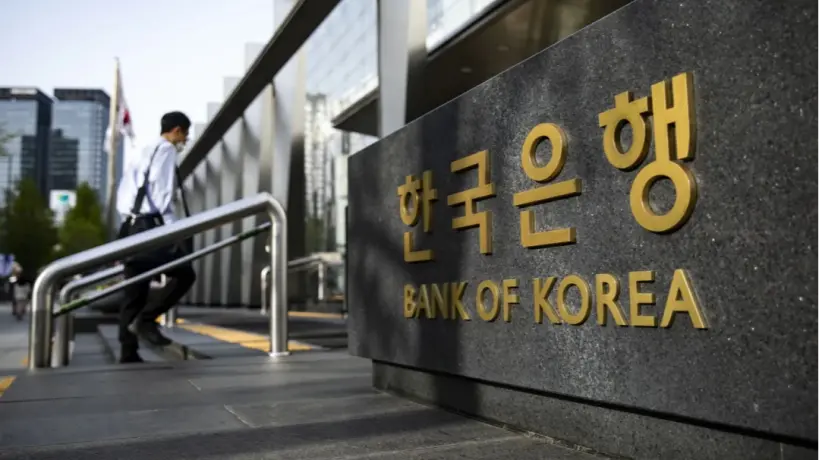
Yonhap News Agency claims that the Bank of Korea (BOK) made a major action on Friday by cutting its benchmark interest rate by 25 basis points to bring it down to 3.25%.
This marks the first time the central bank has lowered its benchmark interest rate since August 2021, therefore indicating a change in its monetary policy following a protracted rate increase phase. The choice follows more than a year of maintaining the rate constant at 3.5%, which had been the rate since February of the preceding year.
Between April 2022 and January 2023, the BOK had instituted a sequence of seven consecutive interest rate increases, so this rate reduction follows, The central bank boosted rates aggressively during that time to lower growing inflation and stabilize the economy. The choice to now cut the rate suggests that the BOK might be reacting to worries about slowing down economic development or that the inflationary pressures could be receding.
From February 2023 till today, the BOK's choice to keep a 3.5% rate for a protracted period showed a cautious approach to managing the balance between lowering inflation and boosting economic growth. Driven by global supply chain interruptions, growing energy prices, and other outside events, inflation had been a main focus for South Korea, The central bank had little option but raise rates to keep the economy from overheating as inflationary pressures grew.
But the BOK is changing its position as global economic situation change and inflation seems to be declining. By making borrowing more reasonable for households and companies, this 25-basis-point rate drop could be meant to boost home economic activity. The central bank wants to boost investment and consumption by cutting borrowing costs, therefore helping to counter any possible slowing down of economic development.
The status of South Korea's export-driven economy could also have affected the BOK's choice. South Korea mostly depends on exports, especially in industrial and technology sectors, Global demand for several products has dropped recently, partially as a result of slowing economies in important markets including China and Europe, By encouraging domestic spending and investment, a drop in the interest rate could assist to offset some of the negative effects of reduced export demand.
Apart from tackling home economic issues, the BOK's rate reduction might also be a reaction to world monetary patterns, Reacting to changing economic circumstances, central banks all around including the European Central Bank and the U.S. Federal Reserve have been modifying their monetary policies, As inflation declines and growth takes front stage, some central banks are starting to move toward more accommodating policies while others are still boosting rates to fight inflation, The BOK's action might be considered as in line with this worldwide trend, therefore orienting South Korea's economy to better negotiate the uncertainty of the present global economic scene.
The BOK will probably be alert in tracking inflation and other economic indicators even with this rate drop, The central bank has to carefully balance guaranteeing that inflation does not increase too rapidly once more with encouraging development, Should inflationary pressures resurep, the BOK might have to modify its strategies once more.
The BOK's choice to cut its benchmark interest rate by 25 basis points shows a change in its emphasis from inflation management to economic growth support, Following a period of strong rate hikes, the central bank seems to be giving measures that will boost borrowing, spending, and investment top priority after over a year of consistent rates, The decisions on monetary policy of the BOK will always be very important in determining the economic future of South Korea as it negotiates the complexity of a shifting global economy, Just the most recent action taken by the central bank to steer the country through uncertain times and guarantee long-term stability is a rate reduction.








Comments
Log in to write a comment